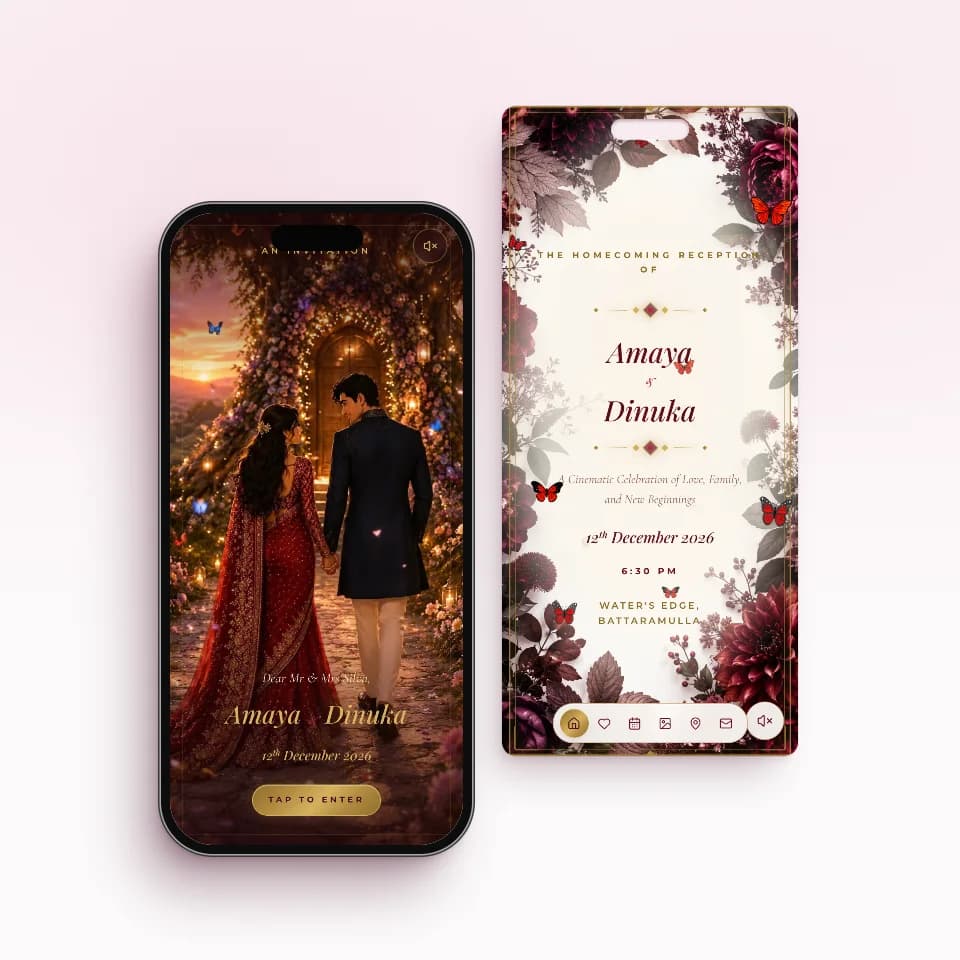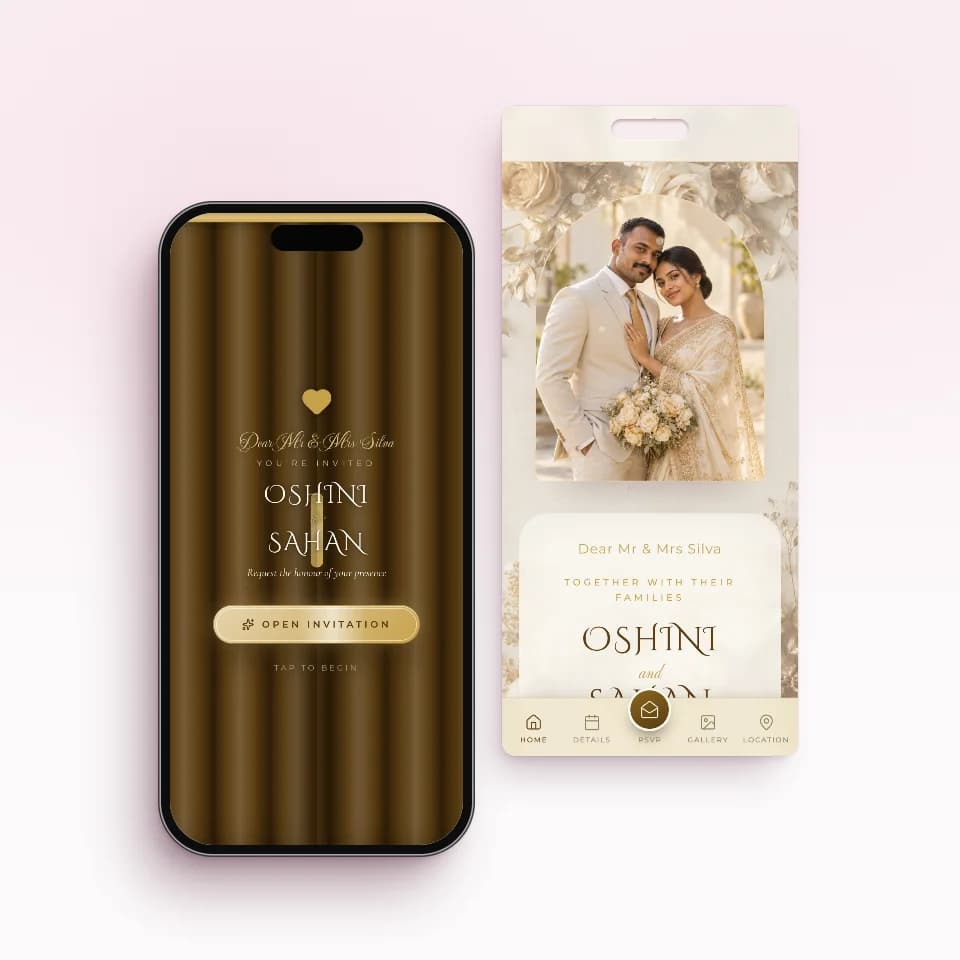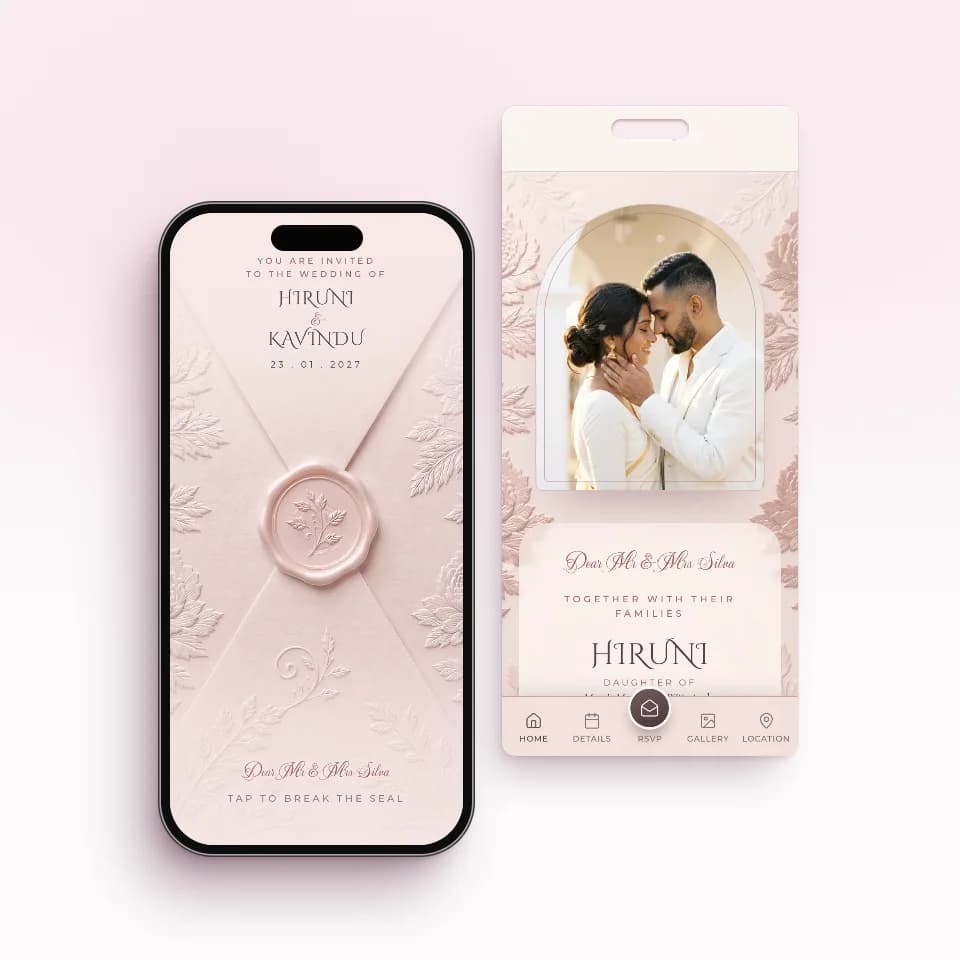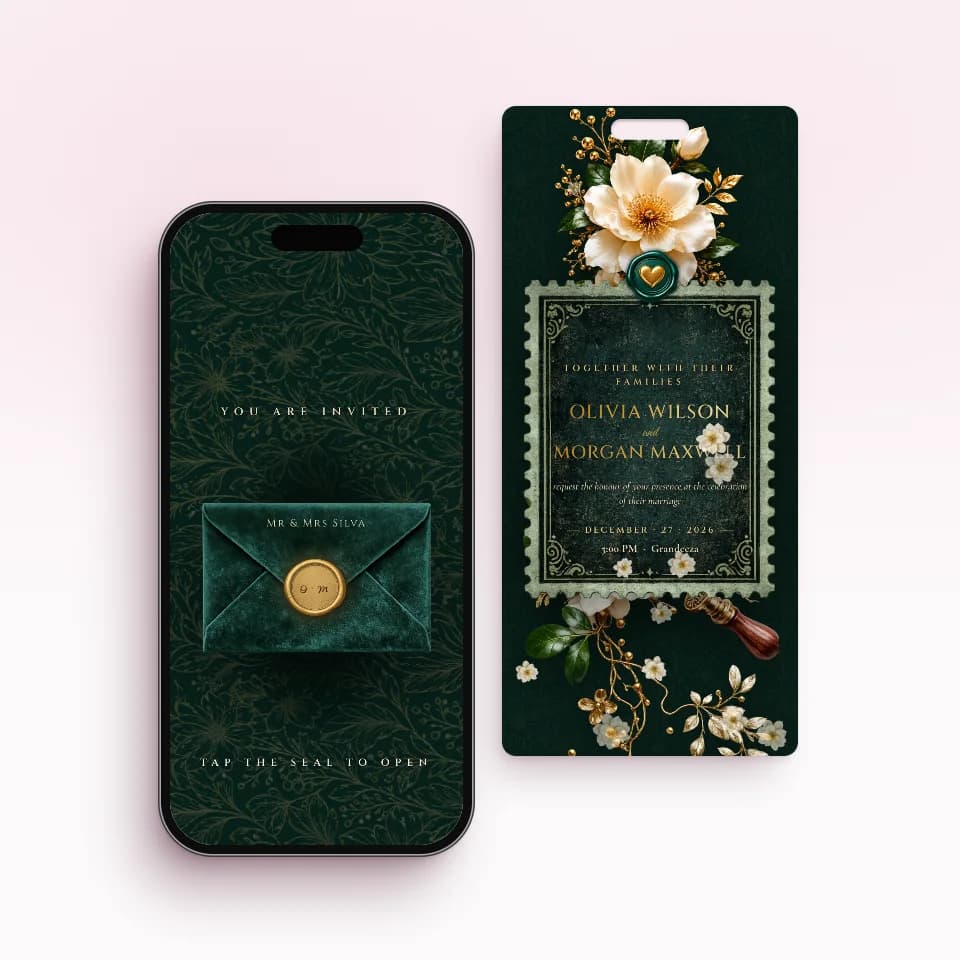
The homecoming ceremony is the day the groom's family welcomes the bride into their home after a Sri Lankan wedding. It is hosted by the groom's parents, usually held a few days to a couple of weeks after the wedding, and today it is often a reception at a hotel or hall. The bride arrives as a new member of the family, and both families celebrate together.
This guide explains where the custom comes from, when it is held, who hosts and attends, what happens when the bride arrives, and how the day differs from the wedding. If you are ready to send cards, our page on homecoming invitations with their own guest list covers designs, wording and timing.
What the homecoming ceremony is
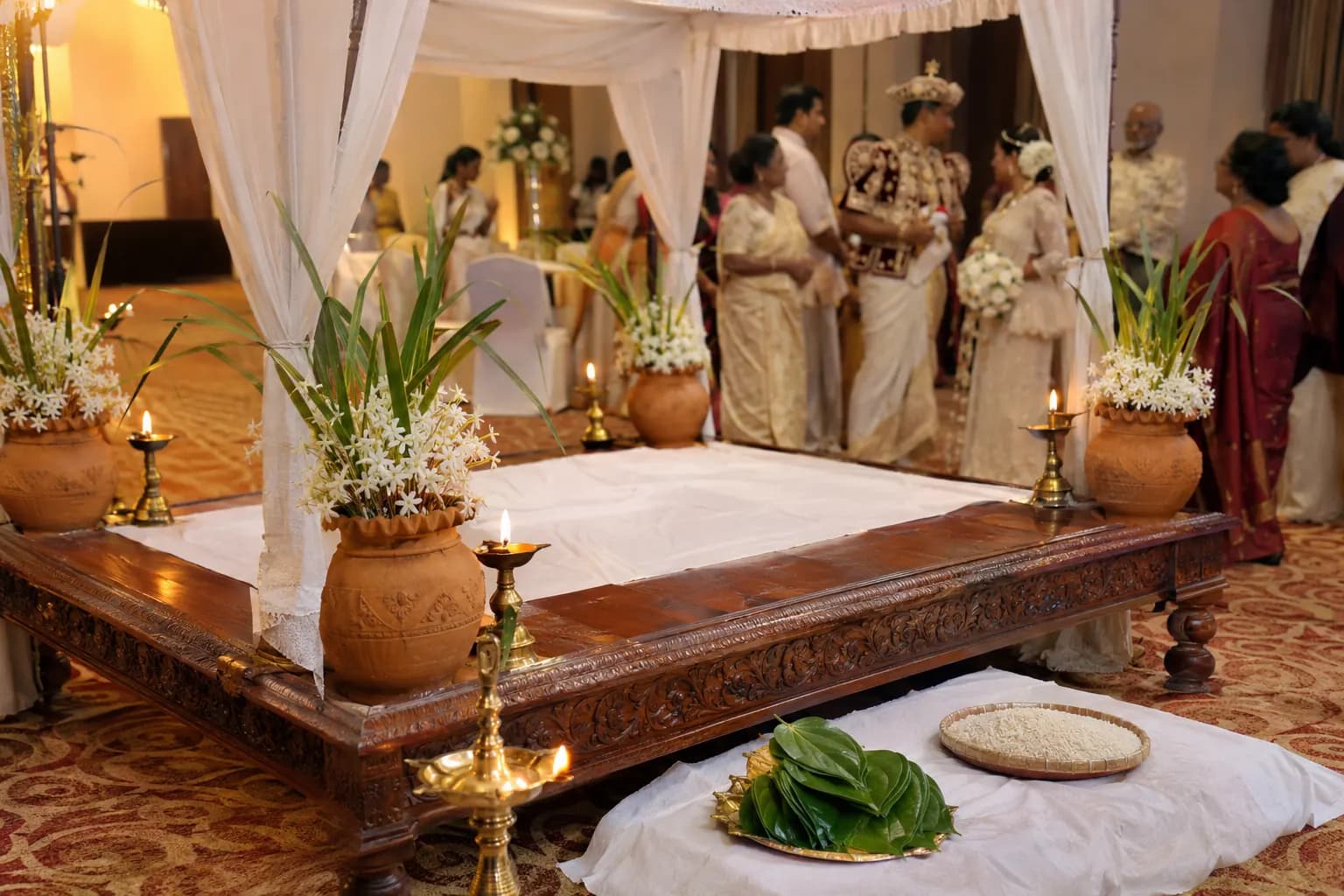
In a traditional Sinhala wedding, the Poruwa ceremony takes place at, or is hosted by, the bride's home. At the end of the wedding day the bride leaves with the groom. The homecoming marks her arrival at his family home as a wife, and it is the groom's family's turn to host.
It began as a family gathering at the groom's house, with relatives and neighbours coming to meet the new bride. Over time, as wedding guest lists grew, many families moved the celebration to a hotel or reception hall. The welcome at the house often still happens, earlier on the day, with close family only.
You will find the custom in many Sinhala families, both Buddhist and Christian. It is a family tradition rather than a religious rite, so there are no vows: the marriage has already taken place. If you want the ceremony that comes before it, our guide to the Poruwa ceremony walks through each step.
When the homecoming is held
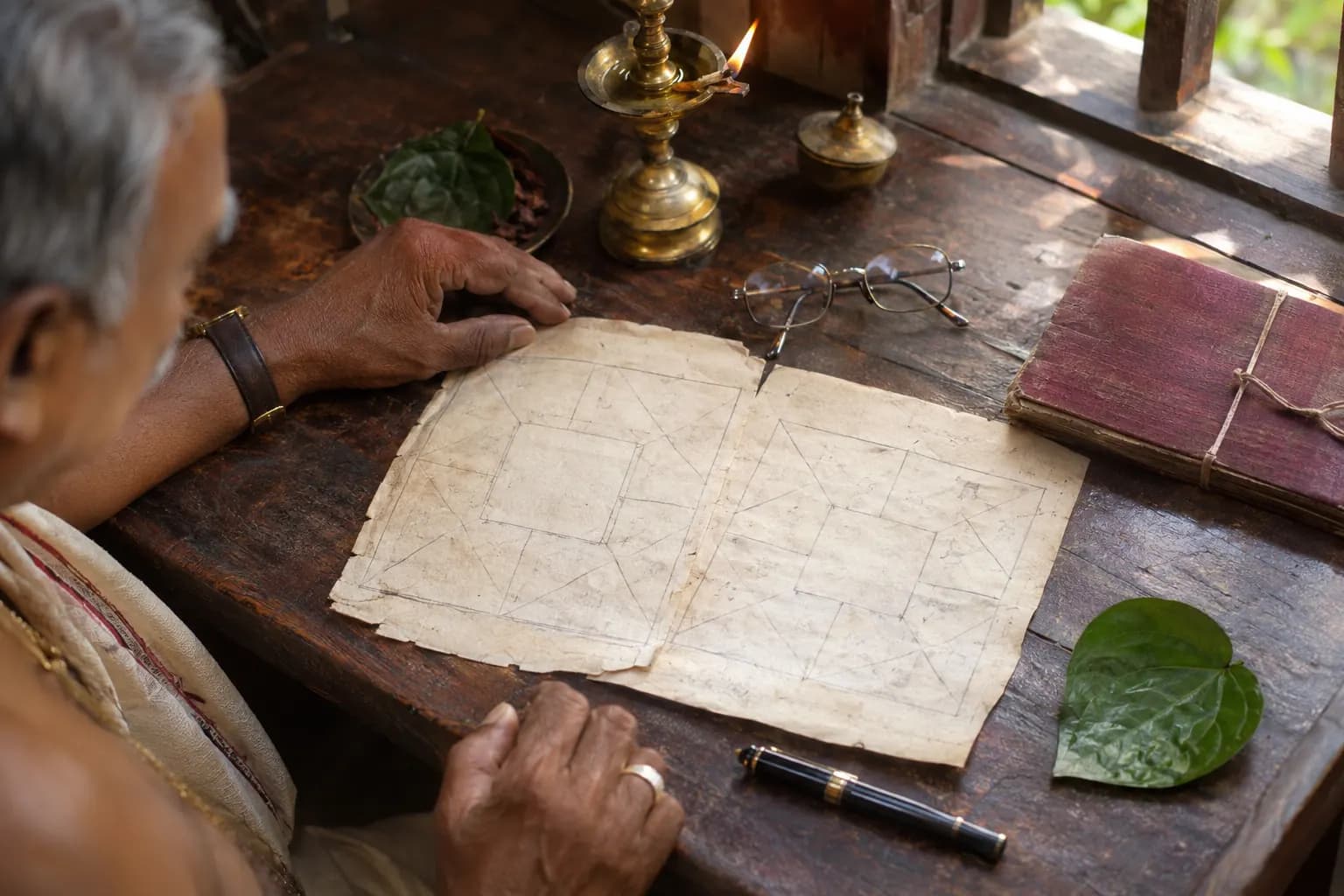
Traditionally the homecoming followed the wedding within days, and the exact time of the bride's arrival was set by the family astrologer as an auspicious time, or නැකත (nakath). Many families still ask for a nakath for the arrival at the house, even when the reception itself starts at a set evening time.
Today the gap varies with the couple:
- A week or so later. The classic pattern, which gives both families time to rest and the bride time to settle.
- The next day. Common when guests are travelling from abroad and can only stay for one long weekend.
- Two weeks or more later. Chosen when the couple travel straight after the wedding, or when the right hall or nakath is only free later.
Who hosts the homecoming, and who is invited
The groom's parents are the hosts. They traditionally send the invitations, receive the guests and pay for the day, in the same way that the bride's parents host the wedding. Many couples now host or share both events themselves, and that is a family decision, not a breach of custom.
The guest list overlaps with the wedding but is rarely the same. It leans towards the groom's side: his relatives, his parents' friends and colleagues, and the neighbours who know the family home. The bride's parents and close family are always invited, and they are honoured guests.
The bride's arrival at the groom's home
The welcome at the house is the heart of the homecoming, and every family does it a little differently. A typical sequence, where the family keeps it, looks like this:
- Arriving at the nakath. The couple reach the groom's house at the auspicious time, often in the car from the wedding or from their first days away.
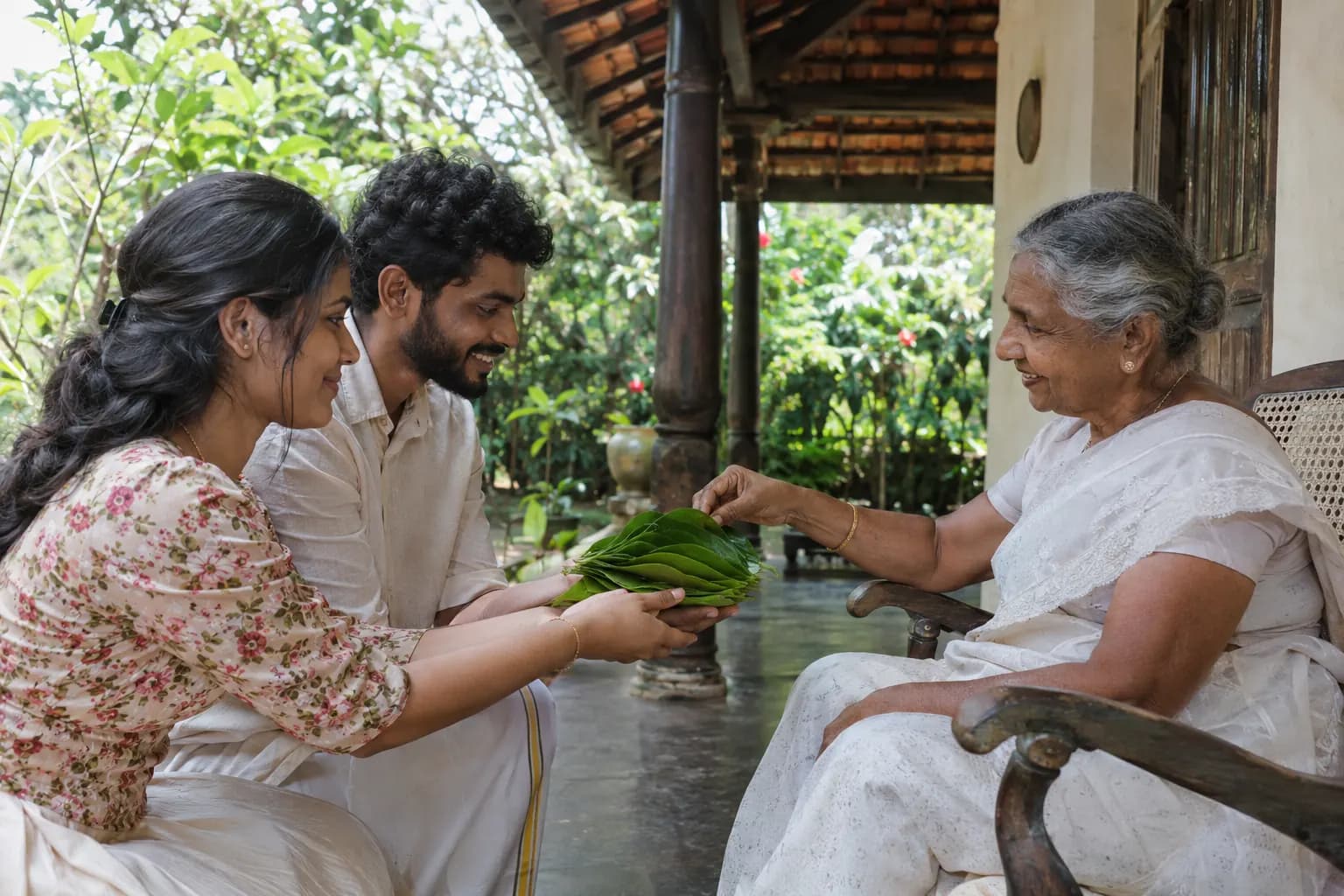
- The welcome at the door. The groom's mother and close family meet the bride at the entrance. In many homes she steps in with her right foot first.
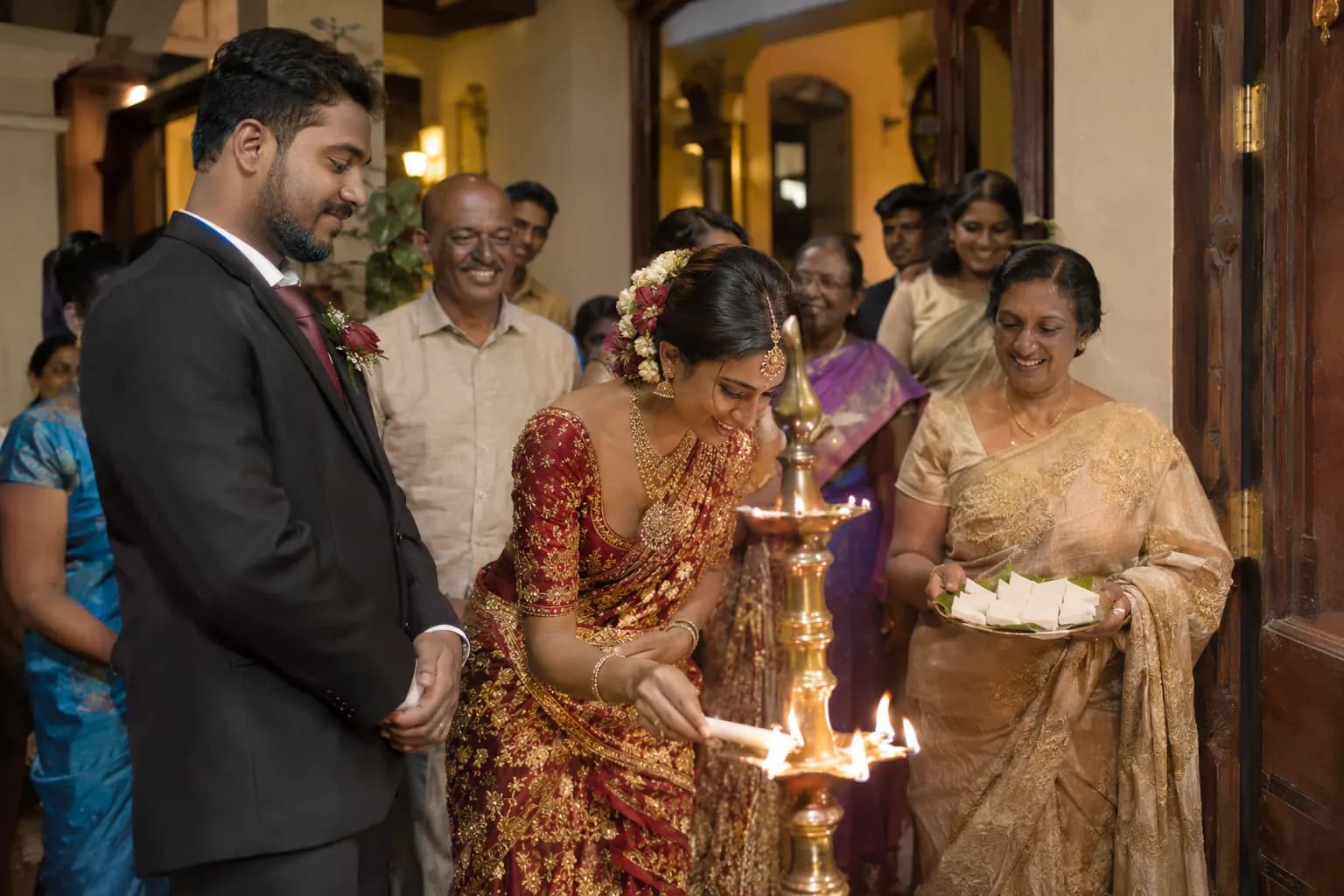
- Lighting the lamp. Some families ask the bride to light the oil lamp in the house as her first act there, a sign of light and prosperity in her new home.
- Sharing kiribath and sweets. The couple and family share කිරිබත් (kiribath, milk rice) and traditional sweets, usually laid out before the bride arrives.
After the welcome, the couple change and leave for the reception, or the celebration continues at the house. A while later, in many families, the couple visit the bride's parents in return, the දෙවැනි ගමන (deveni gamana).
How the homecoming differs from the wedding
Couples often plan the two days at once, so it helps to see them side by side. The table shows the traditional pattern and what has changed for many couples today.
| Wedding | Homecoming | What often changes today | |
|---|---|---|---|
| Hosted by | The bride's parents | The groom's parents | The couple host or share both |
| Main moment | The Poruwa or church ceremony | The bride's welcome at the groom's home | The house welcome is kept small, the reception is the big event |
| Where | Bride's home or a hotel | Groom's home, then a hotel or hall | Both at hotels, sometimes the same one |
| Timing | At the nakath for the ceremony | Days after, nakath for the arrival | The next day, or the same weekend |
| The bride wears | White or ivory saree | A coloured saree | Usually unchanged |
| Guest list | Both families in full | Leans to the groom's side | Two lists, with many guests on both |
| The invitation comes from | The bride's parents | The groom's parents | The couple's names, with parents named |
How to invite guests to the homecoming
Send the homecoming invitation at the same time as the wedding invitation. Guests plan both days together, and anyone travelling needs both dates before they book. Sending it later also risks guests filling the date with something else.
- Name the hosts. Traditionally the card opens with the groom's parents, with the groom's name before the bride's, since it is his family's event.
- Keep it short. There is no running order of rituals to explain. The date, time, venue and a reply-by date are enough.
- Ask for a separate reply. The homecoming hall needs its own head count. A combined reply for both days leaves the caterer guessing.
- Decide if one card will do. If every wedding guest is also invited to the homecoming, put it on the wedding invitation as a second event. Two cards only make sense when the lists differ.
For ready-made words from the groom's parents or from the couple, see our homecoming wording you can copy.
A worked example
Nimesh Silva and Dilhani Perera, a made-up couple, marry at a Poruwa ceremony on Saturday 12 June 2027. Nimesh's parents host the homecoming eight days later, on Sunday 20 June 2027, at a hall near their home, after the welcome at the house at the nakath.
- Three to four months before: both dates go to relatives in Australia and the Gulf, so they can book one trip for both.
- Six to eight weeks before: the wedding and homecoming invitations go out together. Guests on both lists get both, guests on the groom's office list get only the homecoming.
- About two weeks before the wedding: homecoming replies are due, so the hall has a firm number.
- The week before the homecoming: a short reminder goes to anyone who has not replied.
Two invitations, two guest lists, one place to manage them
With INVITATION.LK the wedding and the homecoming can be two separate invitations in one account, each with its own design and details. Two published invitations come with the Complete plan, or with Signature Custom (one custom design plus one ready-made invitation). On Essential, add the homecoming as a second event on the wedding invitation.
- Separate guest lists and RSVPs. Put each guest on the wedding, the homecoming or both, and see the Attending and Not attending replies and head counts for each.
- One message per guest. A guest on both lists gets one WhatsApp message carrying their own link to each invitation, sent from your own phone with one tap per guest.
- See who has opened it. Each list shows who you have sent to and who has opened their link.
- Change details any time. If the nakath moves the start time, edit it and guests see it on the same link.
Essential is Rs. 5,000 for one ready-made invitation, Complete is Rs. 10,000 for two (the wedding and the homecoming, for example), and Signature Custom is Rs. 20,000 for a design made just for you. You pay once, only when you publish, and every paid plan includes unlimited guest links.
Compare the plans and what each includes, start with the homecoming invitation designs, or browse every wedding and homecoming invitation template.