A nakath pathraya (නැකත් පත්රය) is the written list of auspicious times for a wedding, prepared by an astrologer from the couple's horoscopes. It often gives the minute the couple steps onto the poruwa and steps down, the direction to face, and times for rites such as leaving home and the homecoming. The whole wedding day is then planned around it.
This guide explains what is usually printed on a nakath pathra, how an astrologer prepares it, what to take with you, and how those times end up on your invitation and in the running order of the day. If you are planning a Sinhala Buddhist wedding, our Kandyan and Poruwa wedding invitations are built to carry the Poruwa time exactly as the astrologer gives it.
What a nakath pathraya is
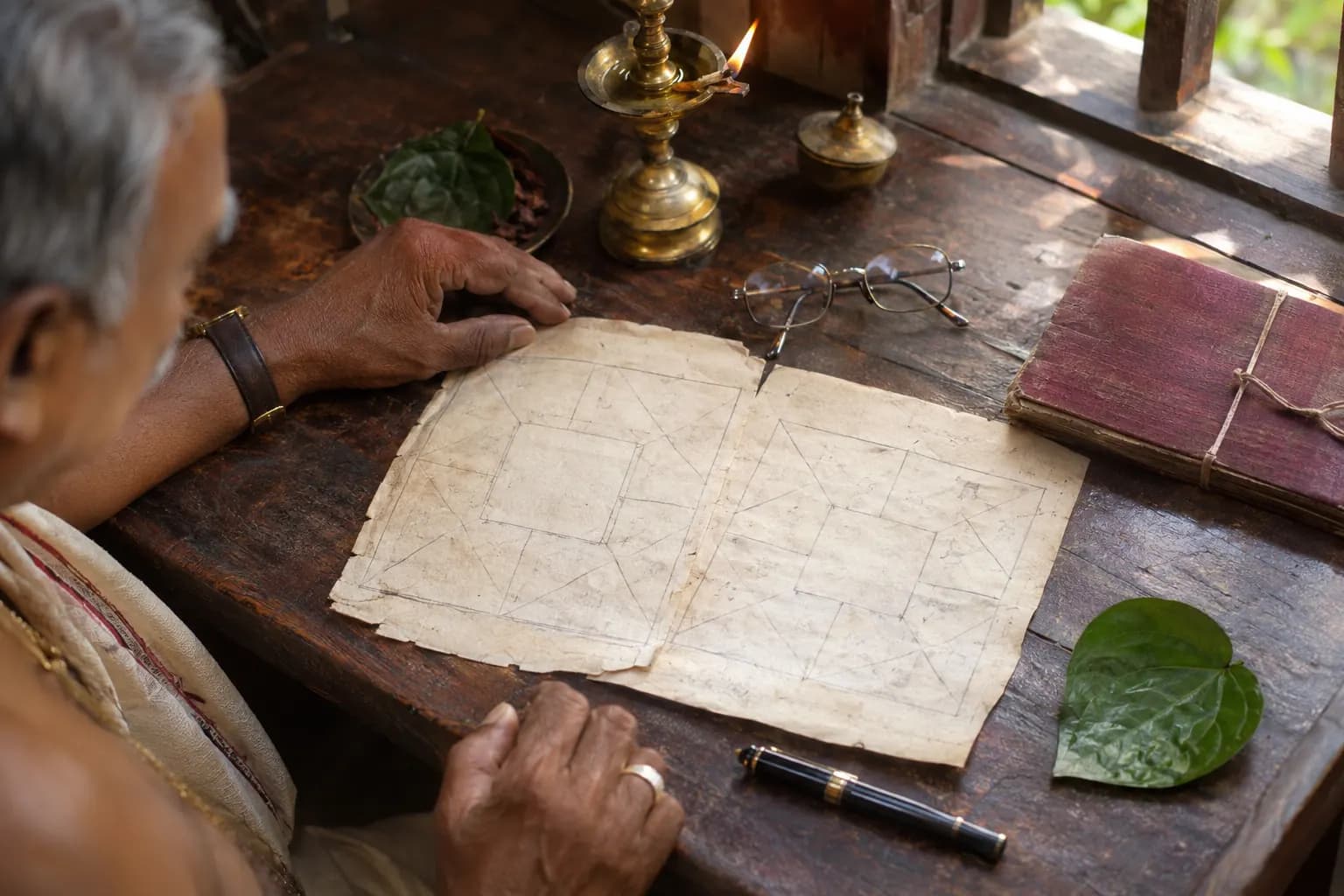
Nakath means auspicious times, and pathraya means a sheet or document. Sinhala Buddhist tradition pays close attention to beginning important things at a good moment and facing a good direction, and a wedding is the most important beginning of all. So before the day, many families take both horoscopes to an astrologer, who reads them together and writes down the times and directions for each step.
Some astrologers hand over a handwritten note. Others give a printed sheet, and many families later have the nakath set out on a decorated card, which is why searching for "nakath pathra design" mostly shows printed stationery. The design is a family choice. What matters is that the times are copied exactly.
What is usually printed on it
Every astrologer sets out the sheet in their own way, and not every family asks for every item. The table below shows the items many families find on a wedding nakath pathra, and what each one changes in your planning. Treat it as a guide to the questions to ask, not a list of what you must have.
| Item on the sheet | What it sets | What it changes in your planning |
|---|---|---|
| Stepping onto the poruwa | The minute the couple steps up, sometimes with which foot first | The fixed point of the day: hair, dressing, procession and photographs work back from it |
| Stepping down from the poruwa | The minute the rites must be finished | How long the ceremony can run, and when the register signing can follow |
| Direction to face | Which way the couple faces on the poruwa | Where the poruwa is placed in the hall, so tell the venue and decorator early |
| Leaving home | When the bride and the groom each leave their homes, and sometimes the direction to set off in | Transport times and the order of the two processions |
| Clothing colour | A colour advised for the couple on the day, or for going away | The going-away outfit and sometimes the décor |
| First meal or kiribath | When the couple shares a first meal, often milk rice | Catering times at the venue or at home |
| Going away and arriving | When the couple leaves the venue and enters the new home | The end of the reception and the drive afterwards |
| Homecoming | Times for the homecoming at the groom's home a few days later | A second event, and often a second invitation |
How an astrologer prepares it
Wedding nakath usually come after the horoscopes have been matched. Many families first ask an astrologer to check the compatibility of the two horoscopes, known as porondam, when the proposal is being discussed. Once both families are happy, they go back, often to the same astrologer, for the wedding times.
The astrologer looks at the positions of the planets in both horoscopes and at the calendar, and chooses a date and times that suit both. Some families come with a date already in mind, because a hall is free or relatives are flying in, and ask the astrologer to find the best times on that day. Others ask for a few possible dates first and book the venue afterwards. The exact method belongs to the astrologer, and astrologers can differ, so it is reasonable to ask how they arrived at the times.
What to take to the astrologer
- Both horoscopes (කේන්දර), the original or a clear copy.
- Exact birth details for both of you if there is no horoscope: date, time to the minute if known, and place of birth.
- Your possible dates, or a range of months, and any dates you cannot use.
- The events you need times for: Poruwa, registration, reception, homecoming, and any other rite your family keeps.
- The venue and its hours, if already booked, so the times fit what the hall allows.
- A notebook or your phone, to check every time back with the astrologer before you leave.
How the nakath appears on the invitation
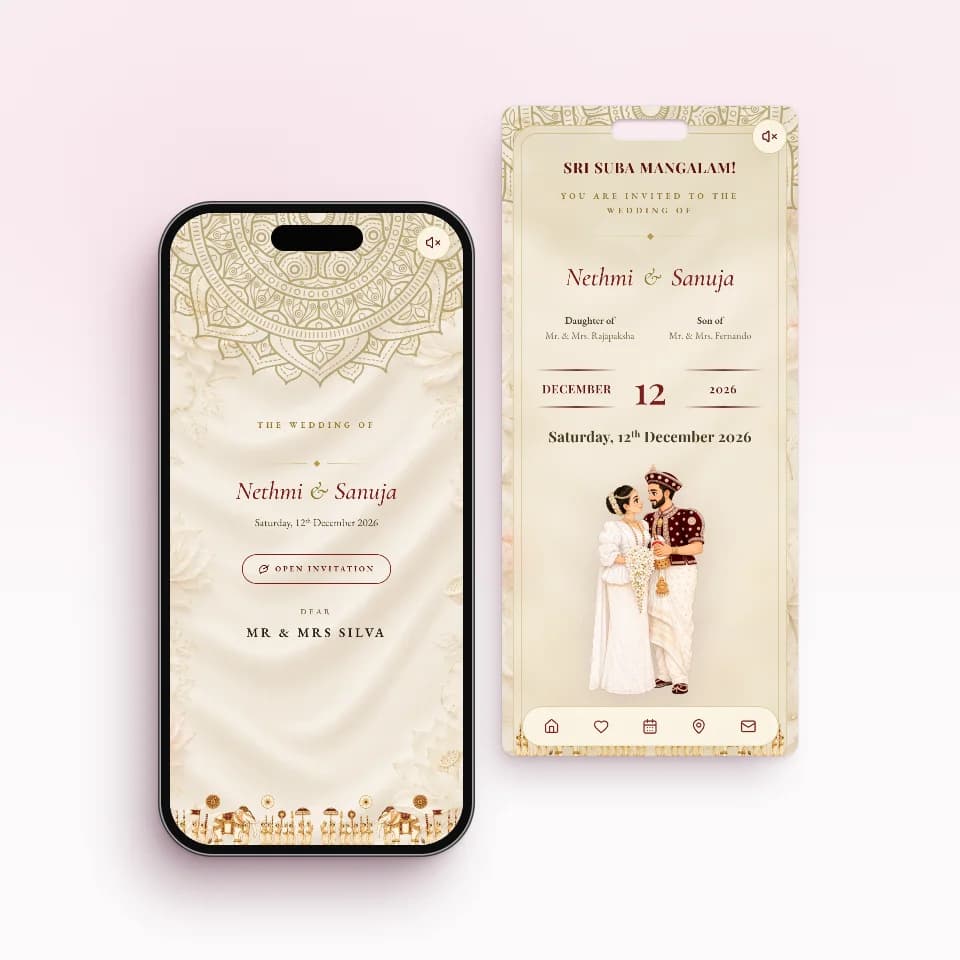
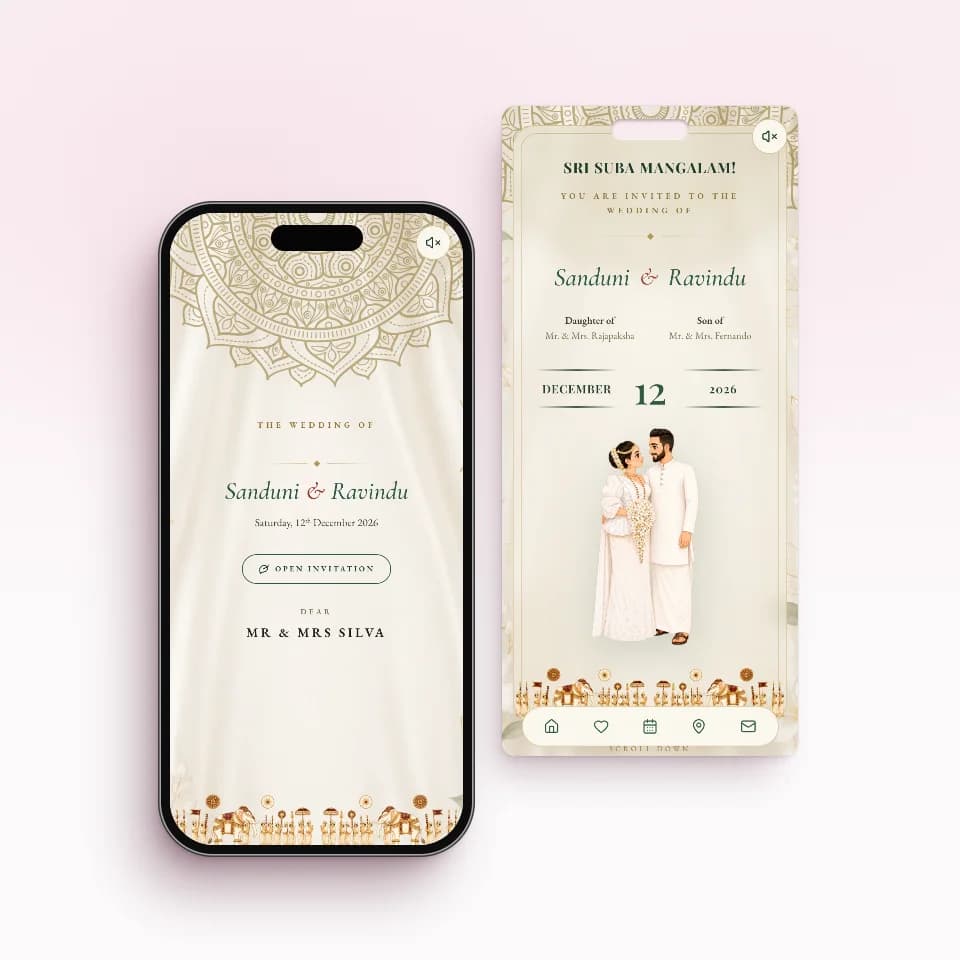
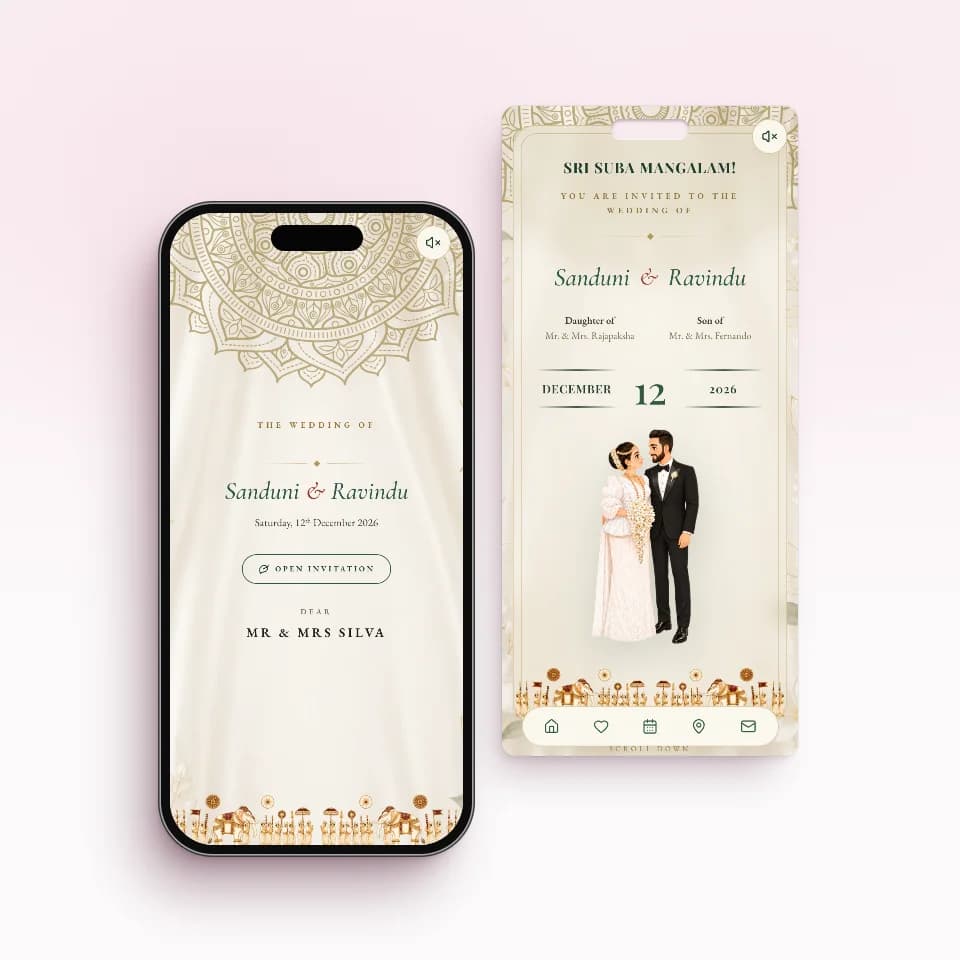
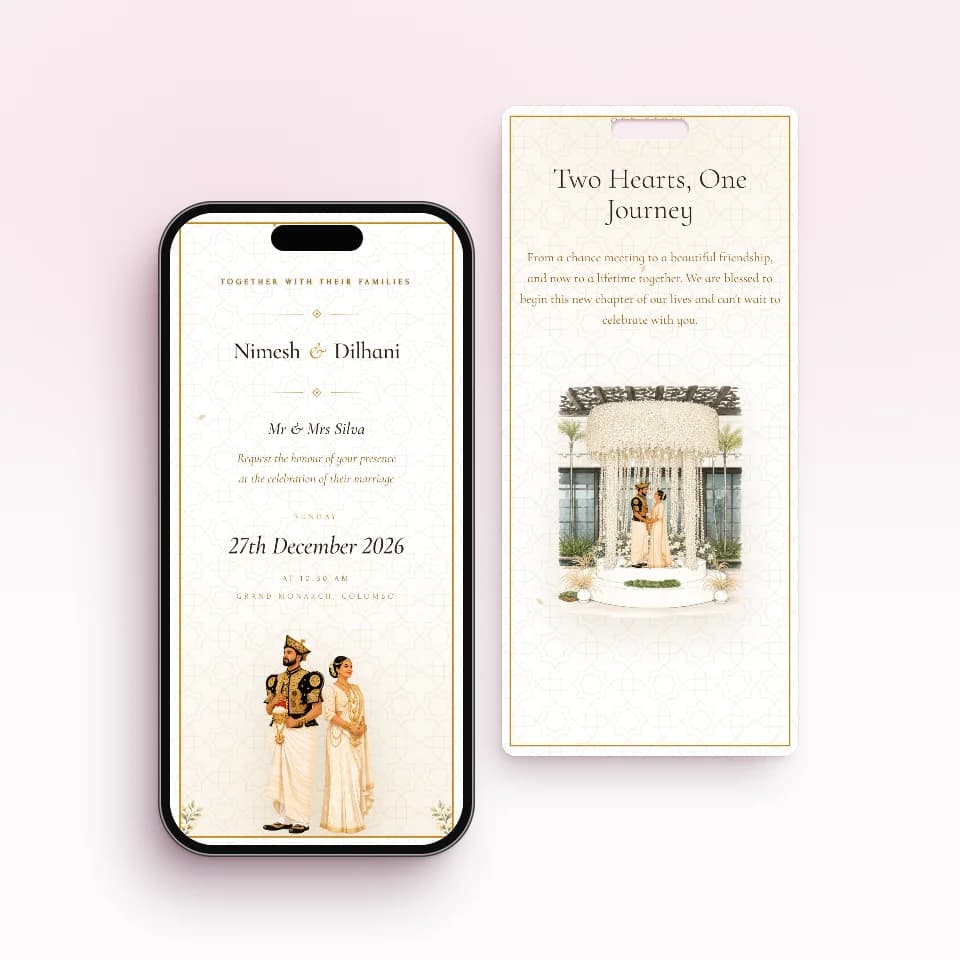
Guests need one time from the nakath pathra: the Poruwa. Many invitations state it to the minute, for example "Poruwa ceremony at 9.42 am", so guests know to be seated before the couple steps up. In Sinhala the time is often introduced as the auspicious time, සුබ මොහොතින්, or written as පෙ.ව. 9.42. Private rites such as leaving home or the first meal usually stay off the guest invitation.
On an online invitation, each event gets its own line: the Poruwa at its nakath time, then the reception and, if you like, the homecoming, each with a venue that opens in Google Maps. Guests can add the date to their phone calendar. If the astrologer adjusts a time, you edit it once and guests see the change on the same link. For the words themselves, see our Poruwa and Buddhist invitation wording, with Sinhala and English examples.
Turning the nakath into a running order
The nakath are fixed, so plan the day backwards from them. Here is a worked example for a made-up couple, Nimesh and Dilhani, marrying on Saturday 12 June 2027. The times are invented for illustration only. Your own times come from your astrologer.
| Time | What happens | Where it comes from |
|---|---|---|
| 6.30 am | Bride's hair and dressing begin | Worked back from the Poruwa time, with a margin |
| 8.47 am | Bride leaves home | Nakath sheet |
| 9.15 am | Guests asked to be seated | Printed on the invitation, about half an hour early |
| 9.42 am | Couple steps onto the poruwa | Nakath sheet, printed on the invitation |
| 10.31 am | Couple steps down | Nakath sheet |
| 10.45 am | Register signed, family photographs | After the rites, at the registrar's convenience |
| 12.30 pm | Lunch reception | Venue booking |
Share the running order with the people who need it: both mothers, the person leading the ceremony, the photographer, the decorator, the hall manager and the drummers. Give everyone the same copy, so nobody works from an old time.
A few things to check
- Copy times digit by digit. 9.42 and 9.24 look alike on a busy day. Ask someone else to check the invitation against the sheet.
- Say am or pm. Many nakath fall early in the morning, and an evening Poruwa is not unusual.
- Confirm the direction with the venue. A hall cannot always turn the poruwa at the last minute.
- Keep the original safe. Take a photograph of the sheet and keep the paper with the wedding documents.
Send your nakath time with INVITATION.LK
Once the astrologer has set the times, an invitation link keeps them right for every guest:
- Every event on one page: the Poruwa at its nakath time, the reception and more, each with its own time, venue and map.
- Corrections on the same link, so a changed time does not mean sending a new card.
- A separate homecoming invitation with its own guest list and replies, on the Complete plan.
- Replies as they come in: guests answer Attending or Not attending and confirm how many are coming.
You can build and preview for free. Essential is Rs. 5,000 for one ready-made invitation, Complete is Rs. 10,000 for two (the wedding and the homecoming, for example), and Signature Custom is Rs. 20,000 for a design made just for you. You pay once, only when you publish, and every paid plan includes unlimited guest links.
See the plans side by side or read the full step-by-step guide to the Poruwa ceremony.