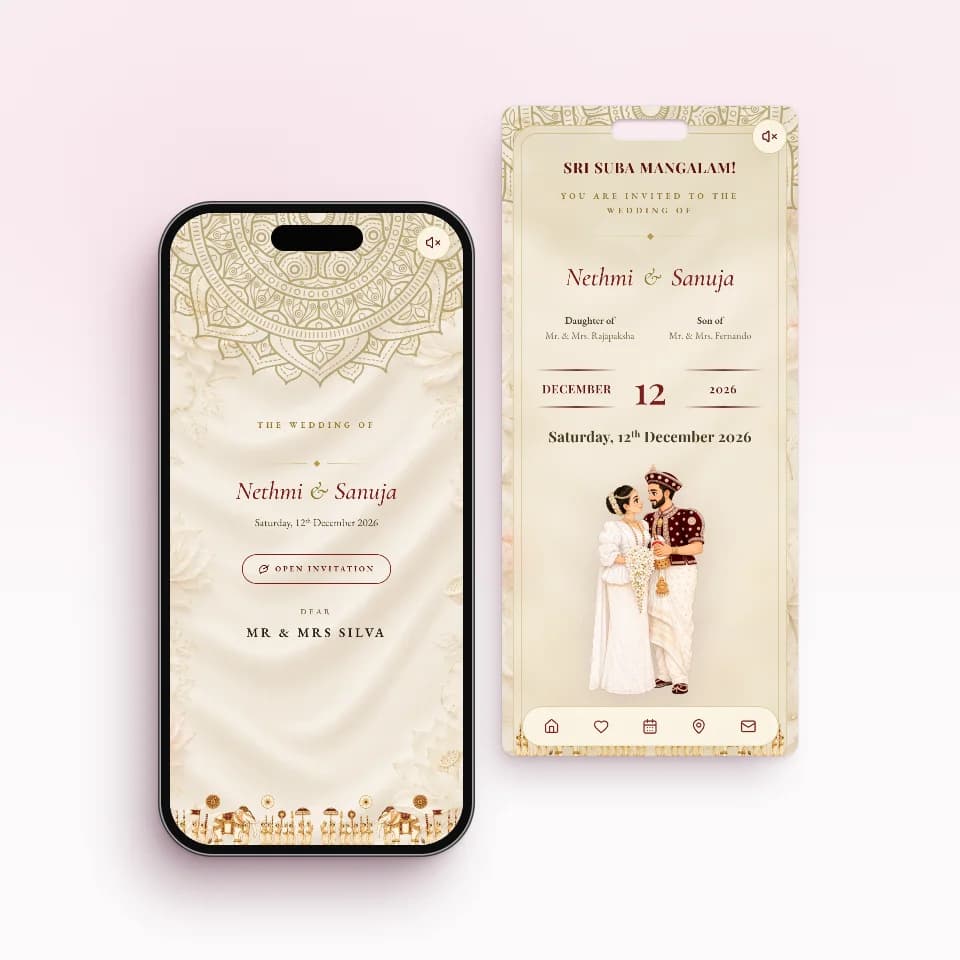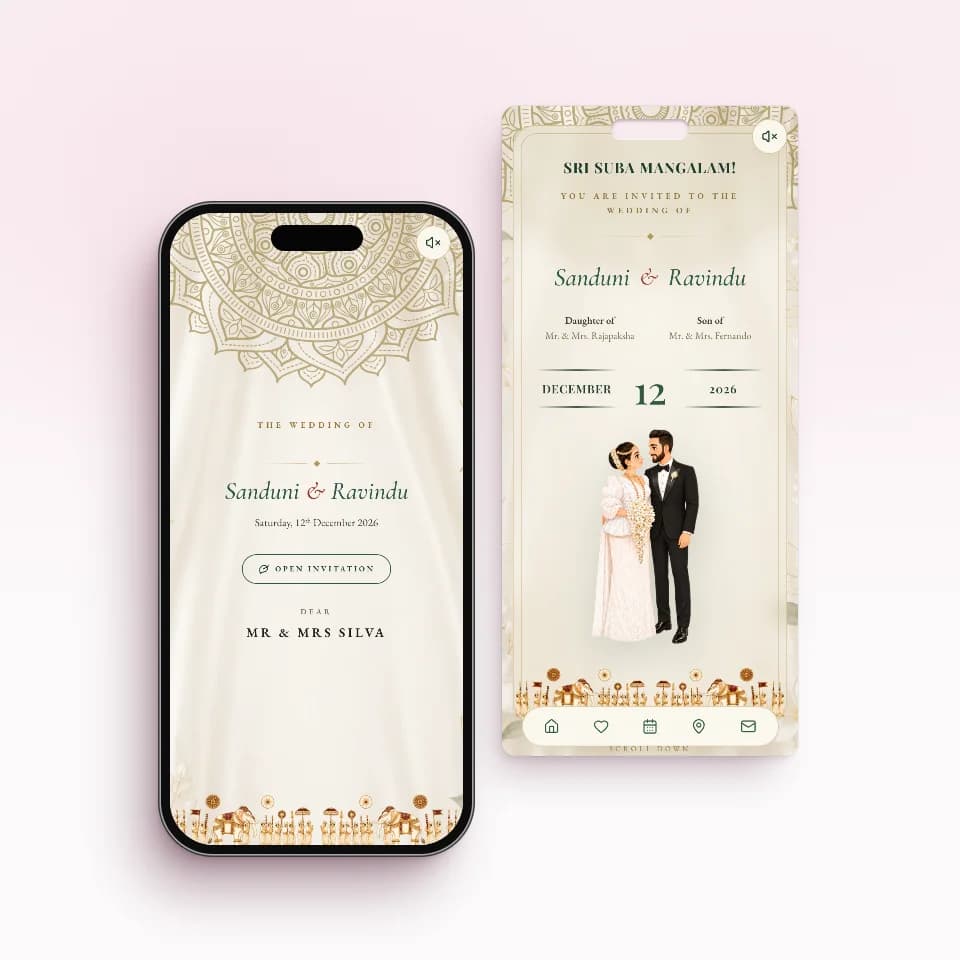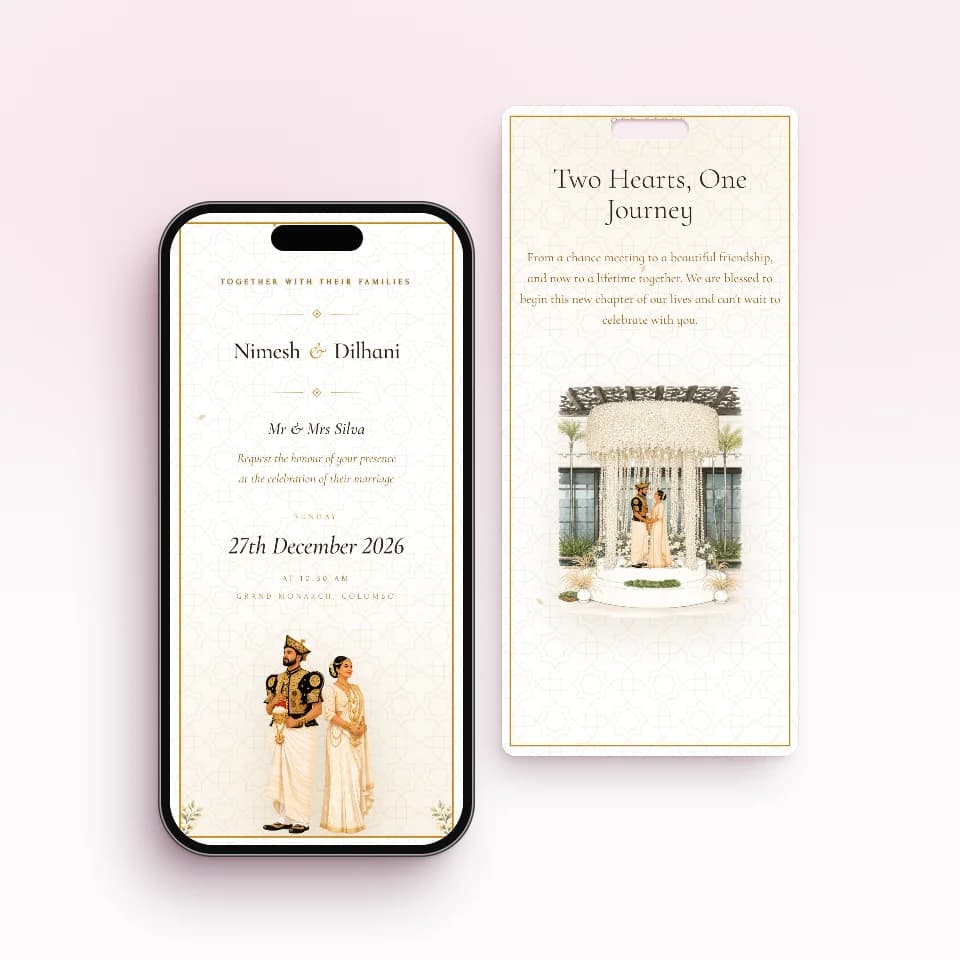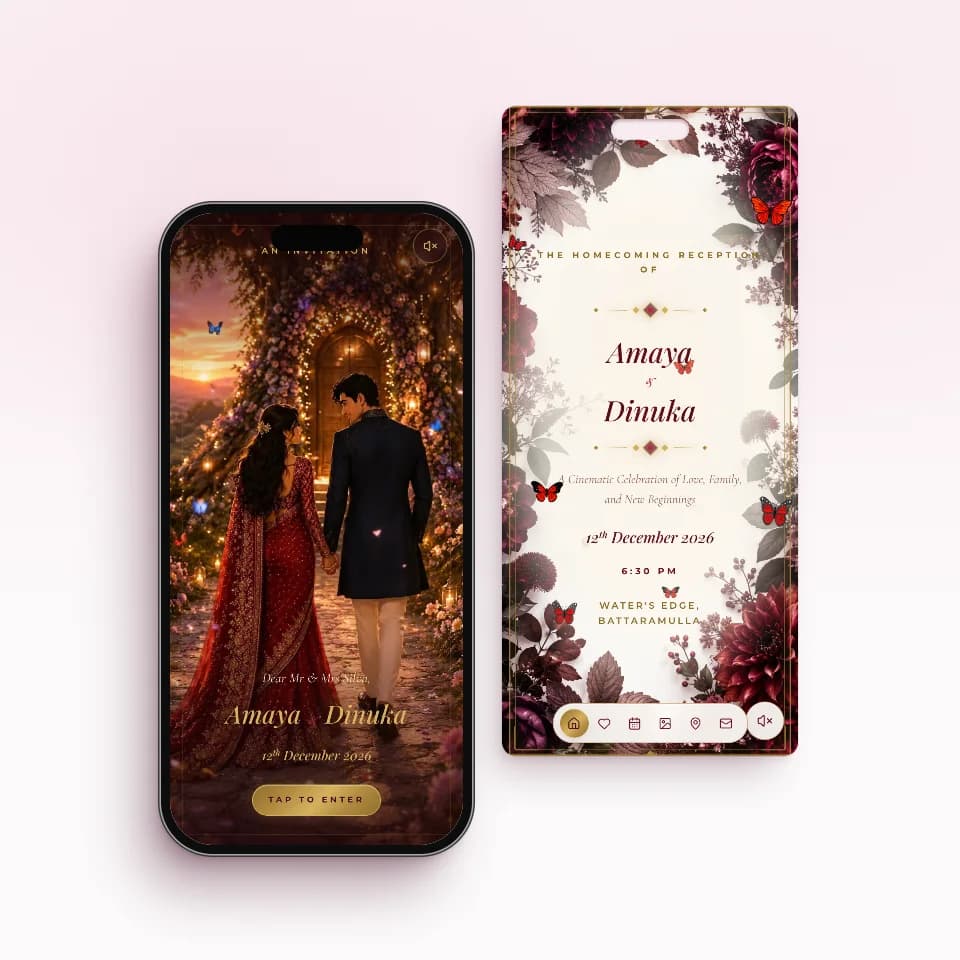
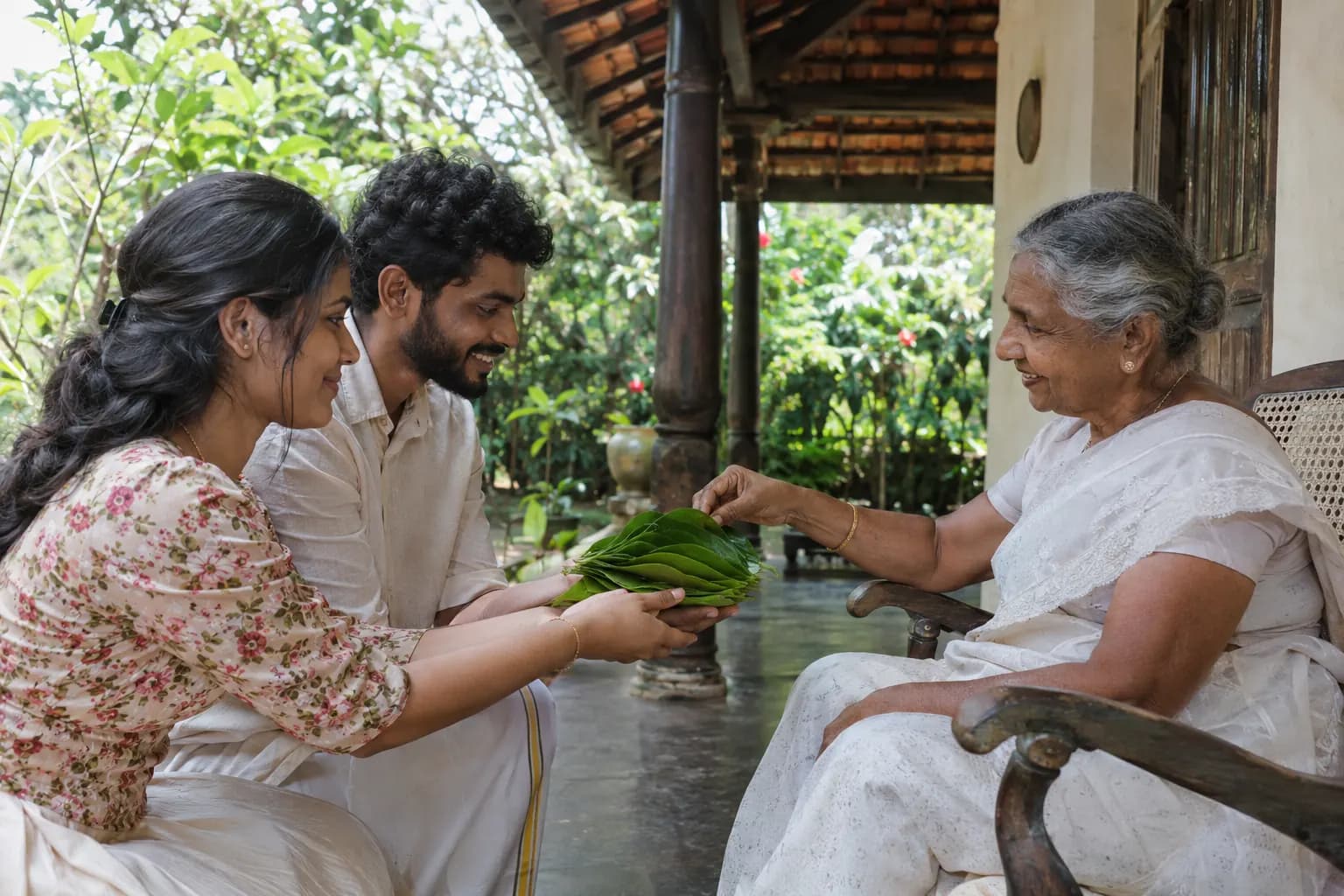
An aradhana pathra (ආරාධනා පත්රය) is a formal invitation, and in Sri Lanka the word carries a custom with it: the family visits elders in person, offers a sheaf of betel leaves, and hands over the invitation with their own words. Many families still do this for grandparents and senior relatives, and send cards or links to everyone else.
This guide covers what the tradition is, how the betel custom works, who is usually invited in person and who by card or message, and how formal wording differs from an everyday message. It also shows how a personal WhatsApp wedding invitation can sit alongside the visit, rather than replacing it.
What aradhana pathra means
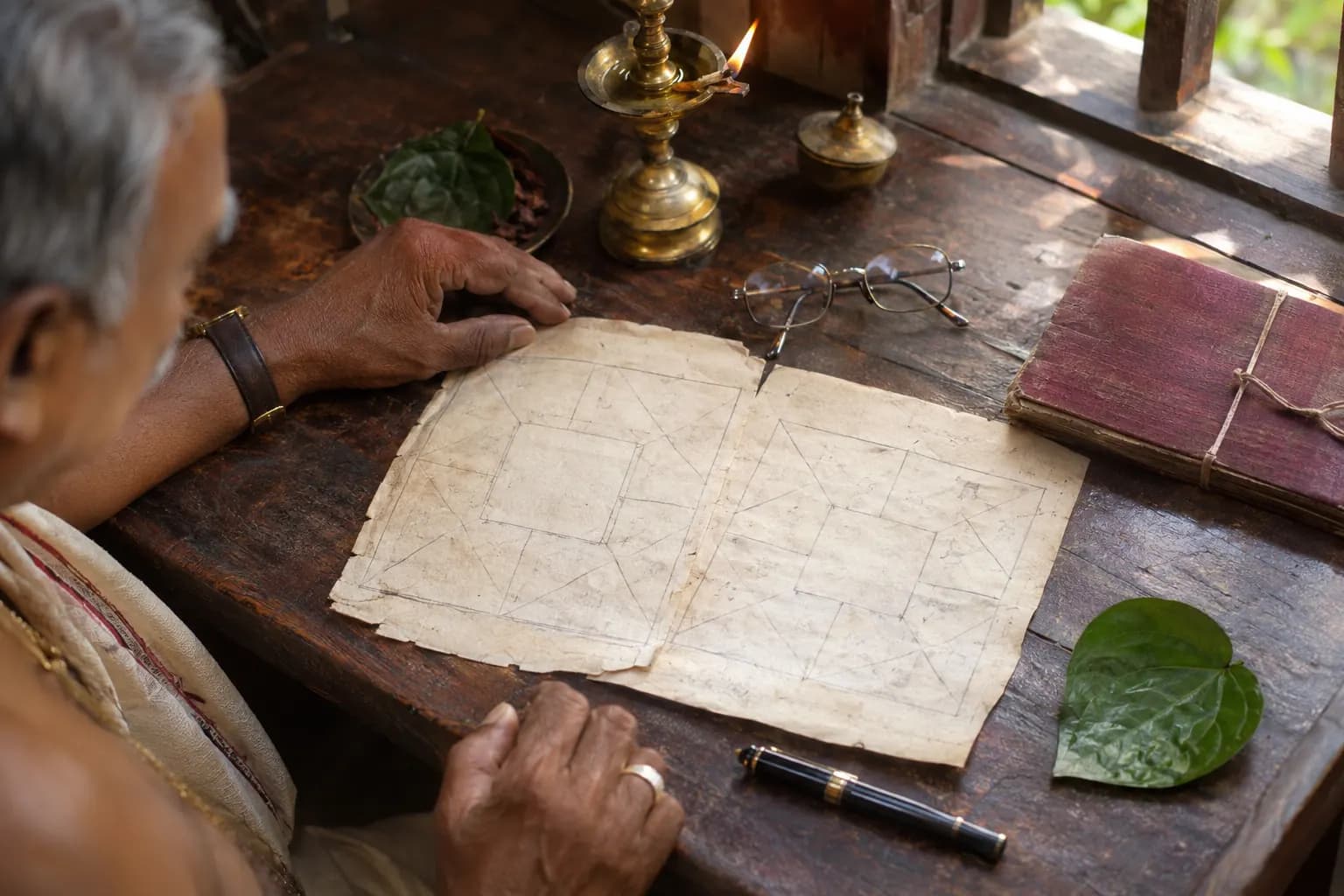
Aradhana is a respectful word for an invitation or a request, the same word used when a family invites monks to a dana or a pirith ceremony. Pathra means a letter or sheet. Put together, an aradhana pathra is an invitation given with respect, and the way it is given matters as much as the card.
That is why the phrase covers both the printed card and the act of inviting. For close elders, the card is the reminder; the visit is the invitation.
The betel leaf custom
Betel (බුලත්, bulath) is how Sinhala families show respect at important moments: to invite, to greet, to thank and to ask forgiveness. When inviting an elder to a wedding, many families take a sheaf of fresh betel leaves, arranged neatly with the tips in the same direction, and offer it with both hands. The card is often placed with the betel, and the younger person may worship the elder before speaking.
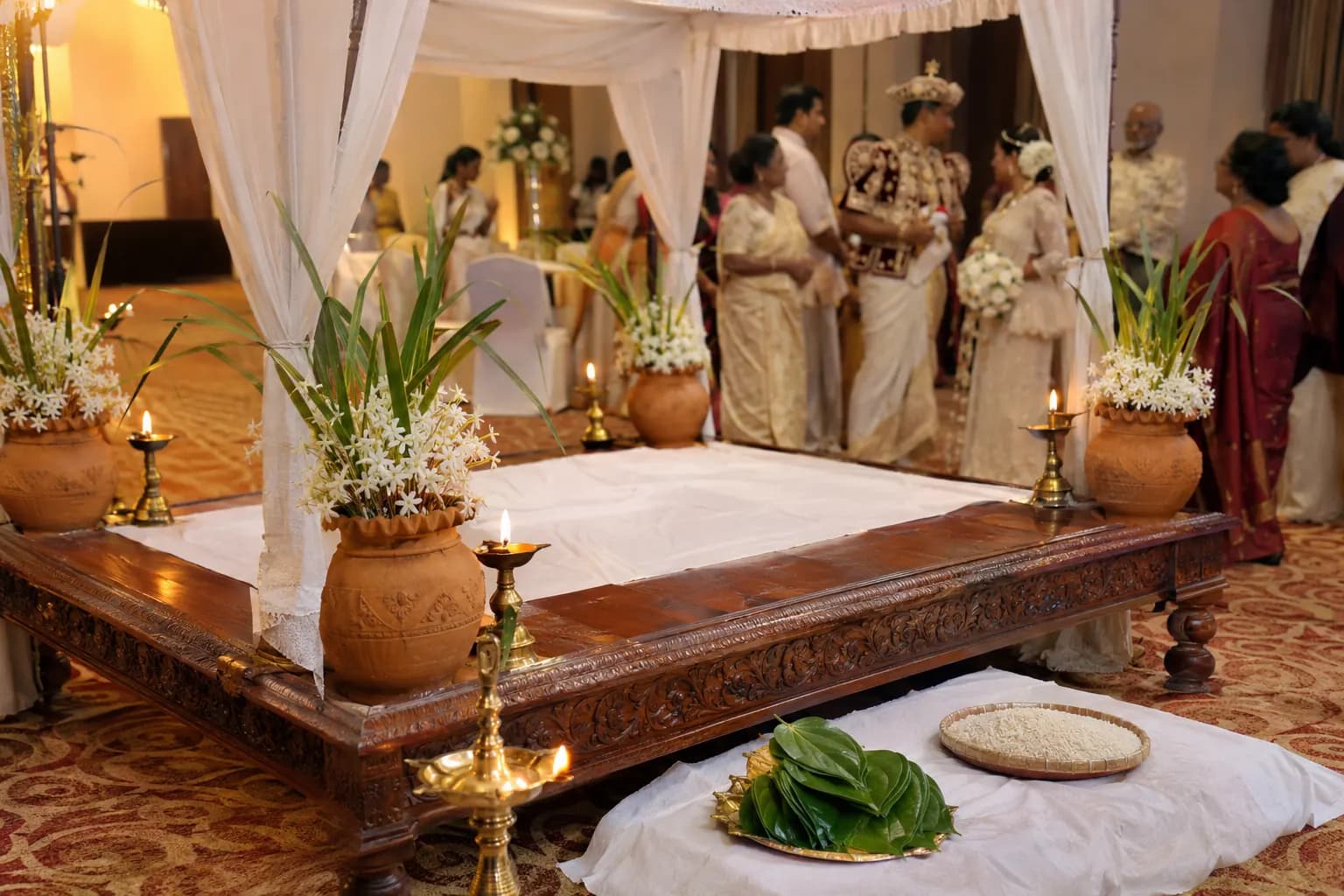
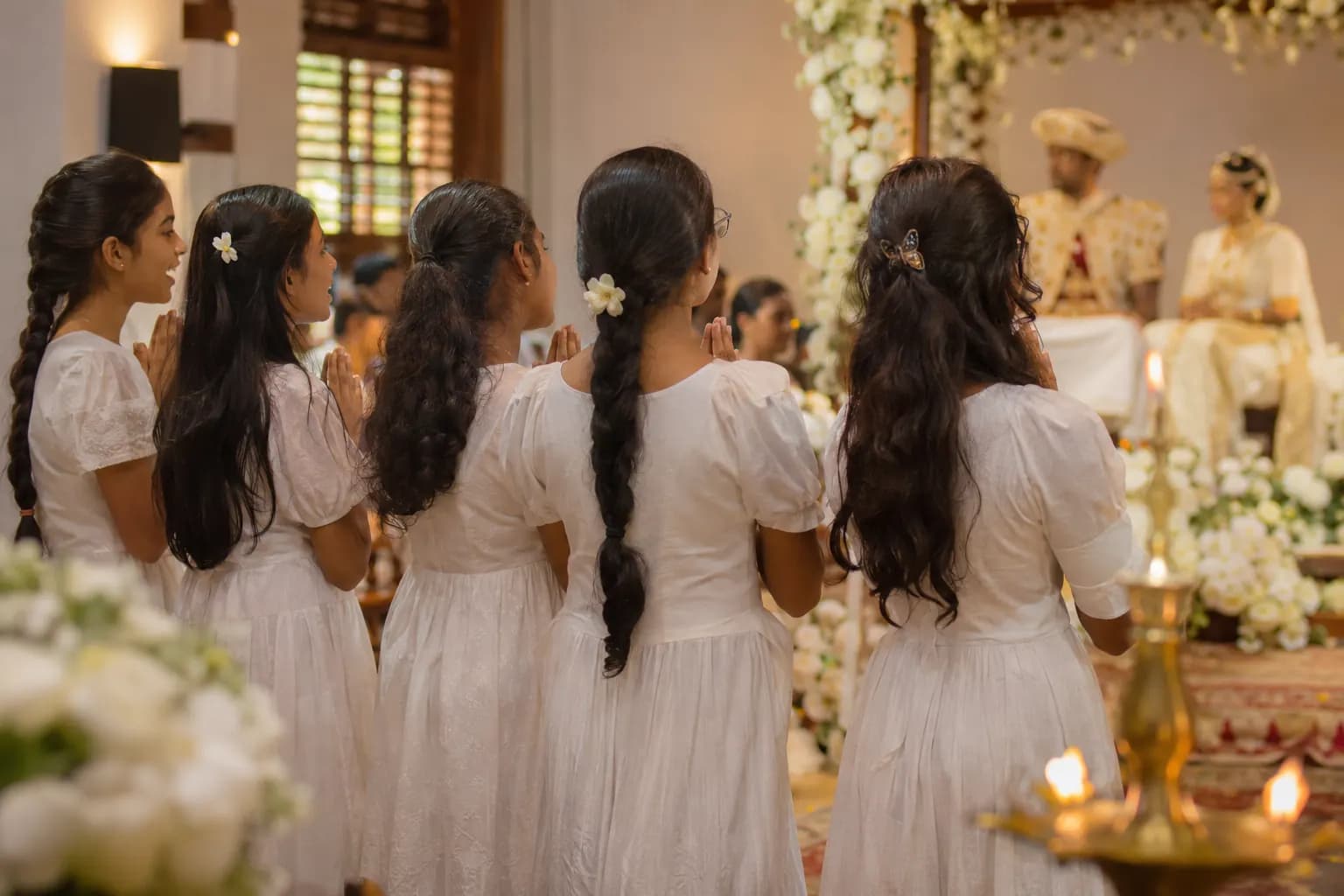
Details differ between families and regions: how many leaves, whether an areca nut goes with them, and who carries the sheaf. If you are unsure, ask the eldest person in your family how it was done at their own wedding. The same respect for betel appears again on the day, when the couple offers betel to elders at the Poruwa ceremony.
Who is invited in person, and who by card or link
There is no fixed rule, and every family draws the line in its own place. The table below shows a pattern many families follow today. It is the reason the traditional visit and a digital invitation work well together: the visit goes to the people it honours most, and the link reaches everyone else on time.
| Who | How they are invited | What goes with it |
|---|---|---|
| Grandparents and the most senior relatives | A visit by the parents, often with the couple | Betel, the printed card, and the link sent afterwards for the details |
| Parents' brothers and sisters, close family elders | A visit by the parents, or a phone call first | Betel where possible, then the card or link |
| Family monk or temple | A visit to the temple, when monks are invited to a dana or pirith before the wedding | An invitation in the temple's own customary way; ask the family elders |
| Neighbours and family friends | A visit or a call from a parent, depending on how close | The card or a personal link |
| Relatives abroad | A phone or video call from a parent | A personal link, sent early so they can plan leave and travel |
| Friends and colleagues | A personal message from the bride or groom | A personal link, in a message that greets them by name |
How the wording changes when it is formal
A formal invitation to an elder is written, and spoken, in a respectful register. In Sinhala that means honorific forms such as ඔබතුමා or ඔබතුමිය, the parents named as hosts, and a polite request rather than a casual "please come". A message to a friend can be warm and short. The examples below use a made-up couple, Nimesh and Dilhani, and the Perera and Silva families.
| Part | Formal (to an elder) | Everyday (to a friend) |
|---|---|---|
| Who is inviting | Mr and Mrs Perera request the pleasure of your presence | Nimesh and I are getting married |
| The request | ඔබතුමාගේ සහභාගිත්වය ගෞරවයෙන් අපේක්ෂා කරමු. | We would love you to be there |
| The occasion | at the marriage of their son Nimesh to Dilhani, daughter of Mr and Mrs Silva | Our wedding on Saturday 12 June 2027 |
| The details | Poruwa ceremony at the auspicious time, followed by lunch | Everything is on the link: [link] |
| Closing | With respect and love | Hope to see you there |
A full Sinhala formal invitation, as it might be written on the card, could read:
පෙරේරා මහතා සහ මහත්මිය, සිය ආදරණීය පුත් නිමේෂ්ගේ, සිල්වා මහතා සහ මහත්මියගේ ආදරණීය දියණිය දිල්හානි සමඟ පැවැත්වෙන මංගල උත්සවයට ඔබ සහභාගී වන ලෙස ගෞරවයෙන් ආරාධනා කරති.For more examples in Sinhala and English, see our Buddhist and Poruwa invitation wording.
Making the visit
- Go early. Elders are often invited first, before cards or links go out to others, so they hear the news from the family and not from someone else.
- Call ahead. A short call to say you are coming is a courtesy in itself, and saves a wasted trip.
- Keep the betel fresh. Buy it on the day if you can, and keep it in a cloth or bag so the leaves do not wilt.
- Leave the details in writing. Elders may forget a time spoken at the door. A card, or the link sent to them or to a son or daughter, keeps the Poruwa time and the venue in front of them.
Keep the custom and send the rest with INVITATION.LK
The visit honours the people closest to you. For the rest of the guest list, a personal link helps:
- One tap per guest from your own WhatsApp, with their name and link already in the message.
- See who has opened their invitation, so you know who still needs a call.
- Replies in one place: Attending or Not attending, with how many are coming.
- Write it in English, Sinhala or Tamil, and change any detail later on the same link.
You can build and preview for free. Essential is Rs. 5,000 for one ready-made invitation, Complete is Rs. 10,000 for two (the wedding and the homecoming, for example), and Signature Custom is Rs. 20,000 for a design made just for you. You pay once, only when you publish, and every paid plan includes unlimited guest links.
Choose a traditional design or compare the plans and prices.