The Poruwa ceremony is the heart of a Sinhala Buddhist wedding. At an auspicious time set by an astrologer, a maternal uncle leads the bride and groom onto the poruwa, a decorated wooden platform. Elders chant blessings, the couple's little fingers are tied with a thread and water is poured over their hands, betel is offered, and a coconut is split as they step down married.
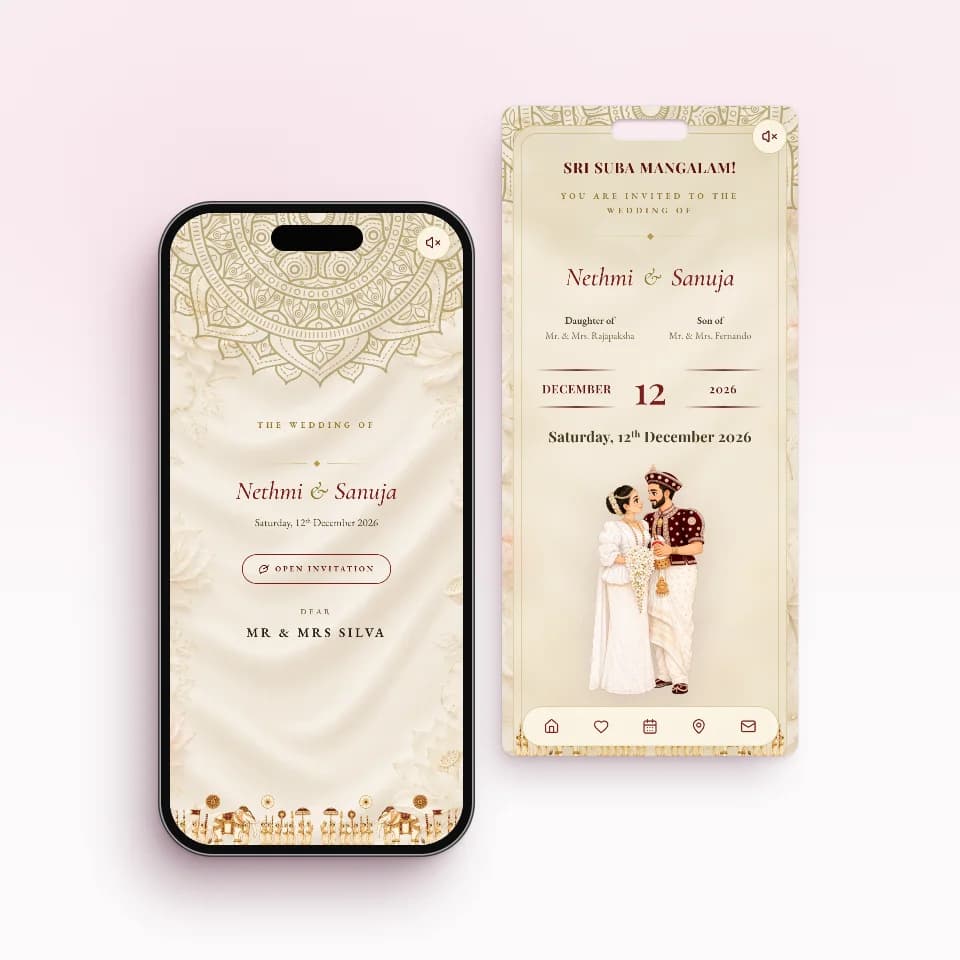
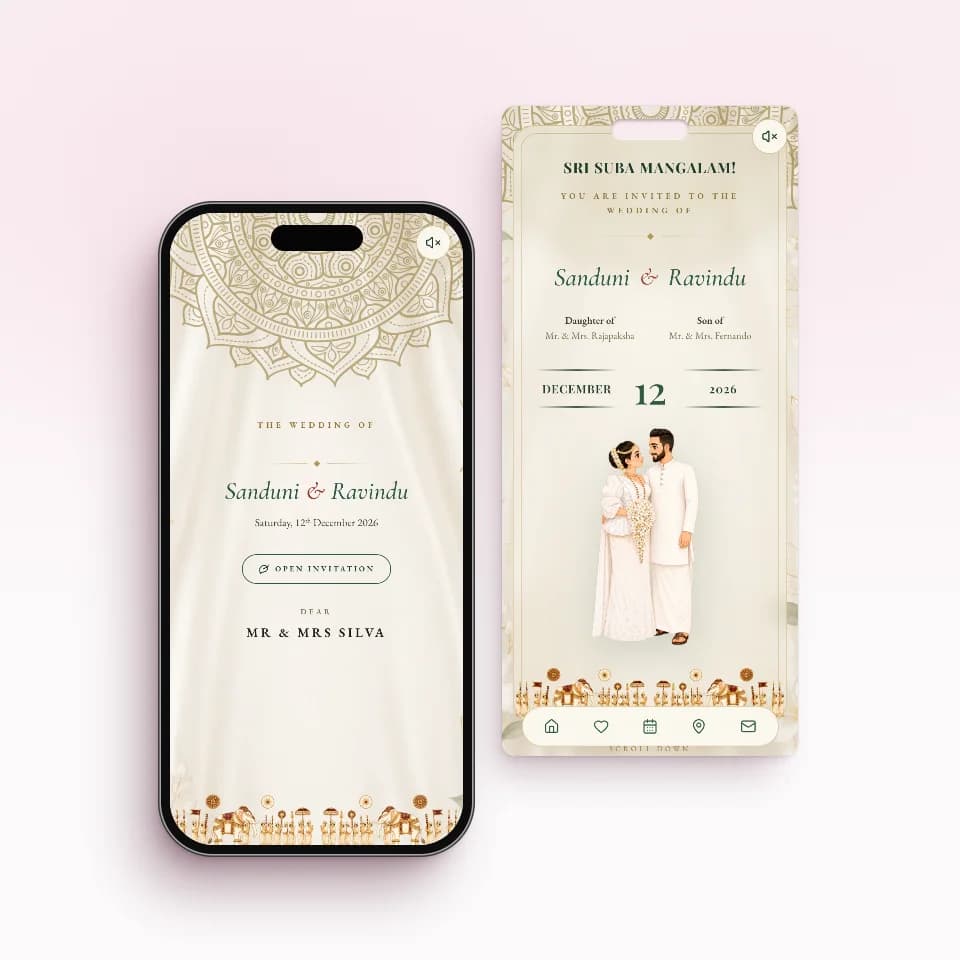
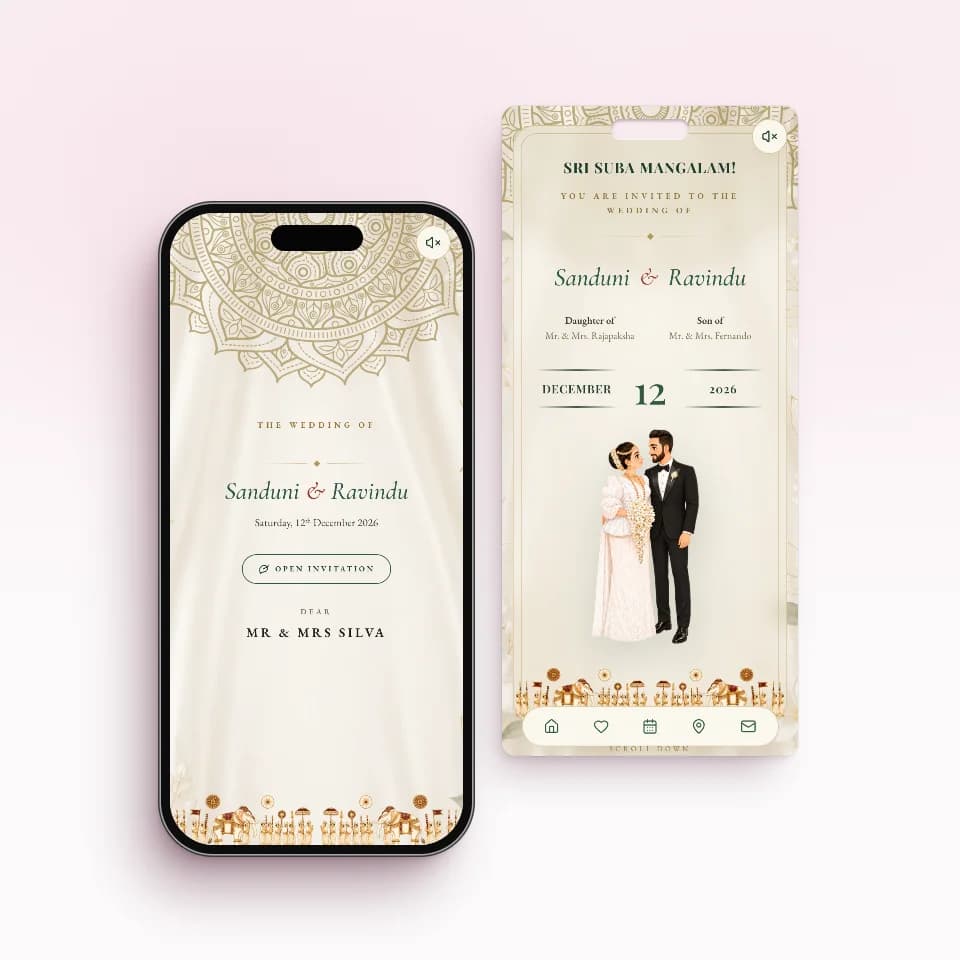
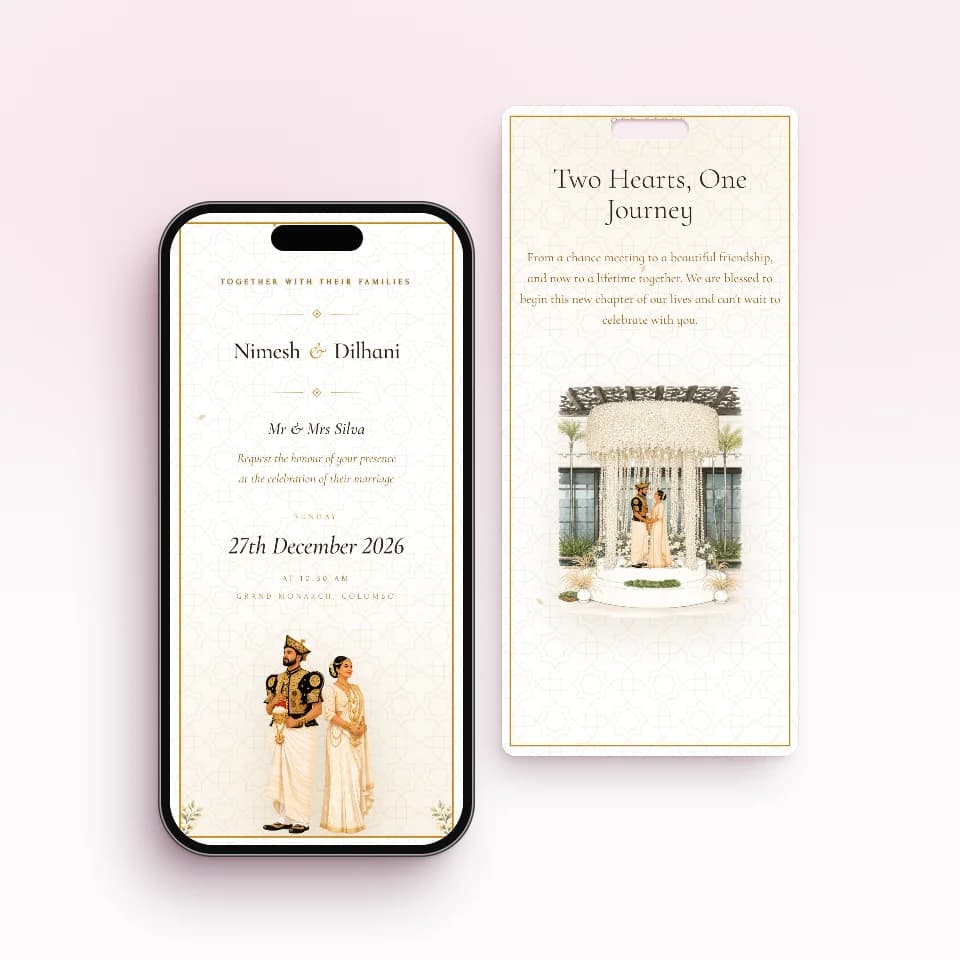
This guide is for Sri Lankan families abroad who want to get the details right, and for partners marrying into the culture who want to know what they are walking into. It covers the steps in order, what each item on the poruwa means, who stands where, and what your invitation needs to say. If you are already choosing a design, our Kandyan and Poruwa wedding invitations are built around this day.
What the poruwa is
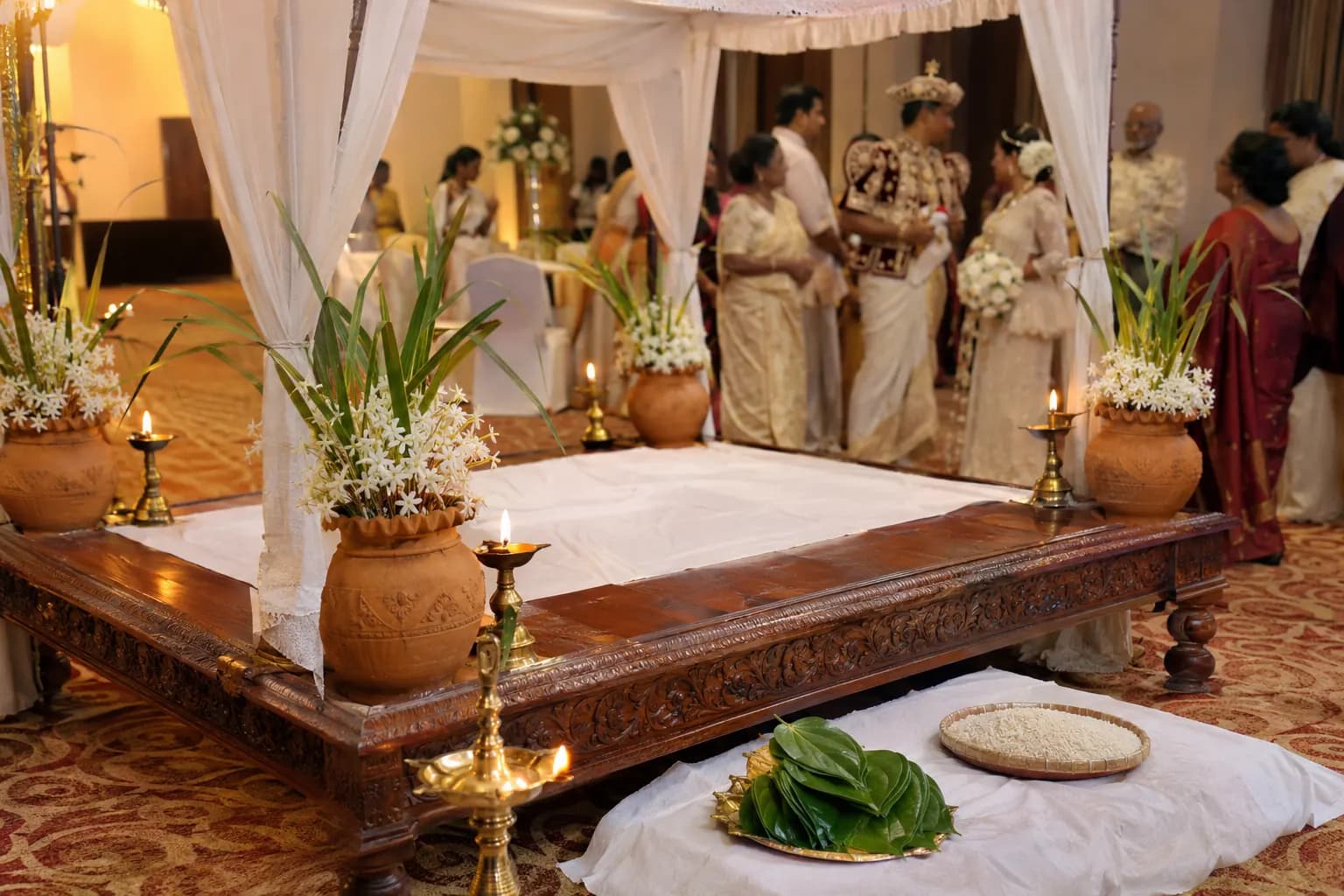
A poruwa is a raised platform, built for the day, where the wedding rites take place. Ratnapala (1991) describes it as a ceremonial stage made of wooden planks and decorated with young coconut leaves. Today it is often a carved wooden structure with pillars and a roof, hired from a decorator or provided by the hotel, but the idea is the same: a clean, raised, blessed space set apart from the crowd.
The custom is old. A carved granite poruwa survives at the Magul Maha Viharaya in Lahugala, in the Ampara District, and tradition links it with the wedding of King Kavantissa and Queen Vihara Maha Devi, the parents of King Dutugemunu. Whether or not that story is exact, it tells you how long Sinhala families have married on a poruwa.
Building and dressing the poruwa has traditionally been the bride's family's responsibility, and a proud one. Senaratne (1999) notes that its look changes from wedding to wedding, because each maker brings their own ideas. What does not change is the set of items placed on and around it, which is where most of the meaning sits.

Before the day: the nakath and the direction
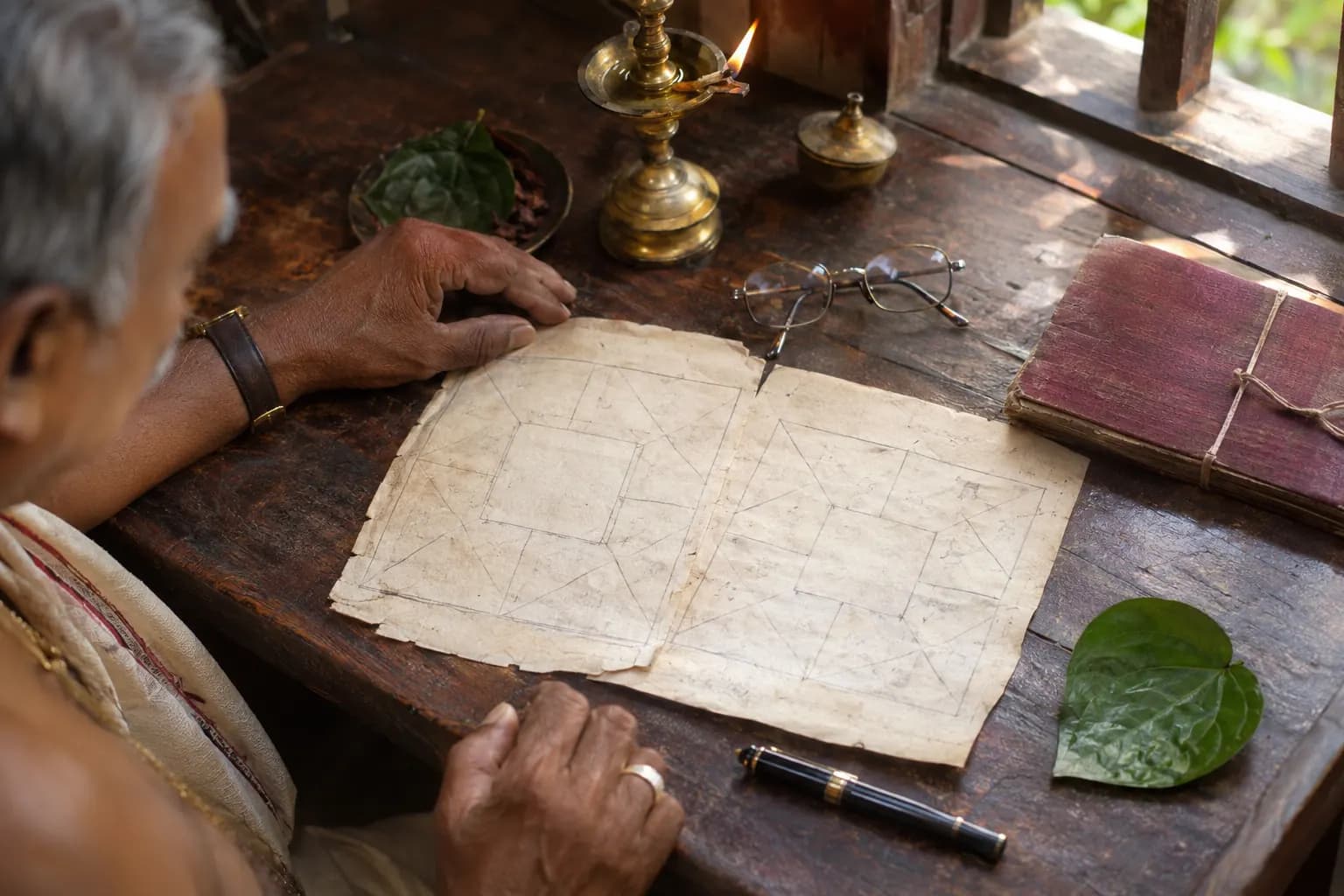
Almost everything about the Poruwa ceremony is timed. Before the wedding, the families take both horoscopes to an astrologer, who reads them together and sets the nakath: the auspicious times. For the wedding day these usually include the minute the couple steps onto the poruwa, the minute they step down, and the direction they should face. Some families also have a nakath for starting to build the poruwa itself.
The astrologer writes these times down, and they become the fixed points of the whole day. Hair and dressing start from them, the photographer plans around them, and the invitation has to state the Poruwa time exactly. Our guide to the nakath pathraya and how it is prepared explains what is written on it and what the astrologer needs from you.
Direction matters as much as time. Sinhala Buddhist tradition pays close attention to both, in the belief that starting something at a good time and facing a good direction brings a good result. So the poruwa is placed, and the couple faces, the way the astrologer advised.
The ceremony step by step
The order below is a common one. Families and regions vary, and some steps are shortened or left out at hotel weddings, so treat this as a map and follow whoever is conducting your ceremony on the day.
1. Entering at the nakath time
The couple waits nearby, dressed and ready, until the exact minute. When it comes, drummers play and the conch is blown to announce that something important is beginning. A white cloth, the pavada, is often laid along the path so the couple walks to the poruwa on clean white cloth.
2. The maternal uncle leads the couple up
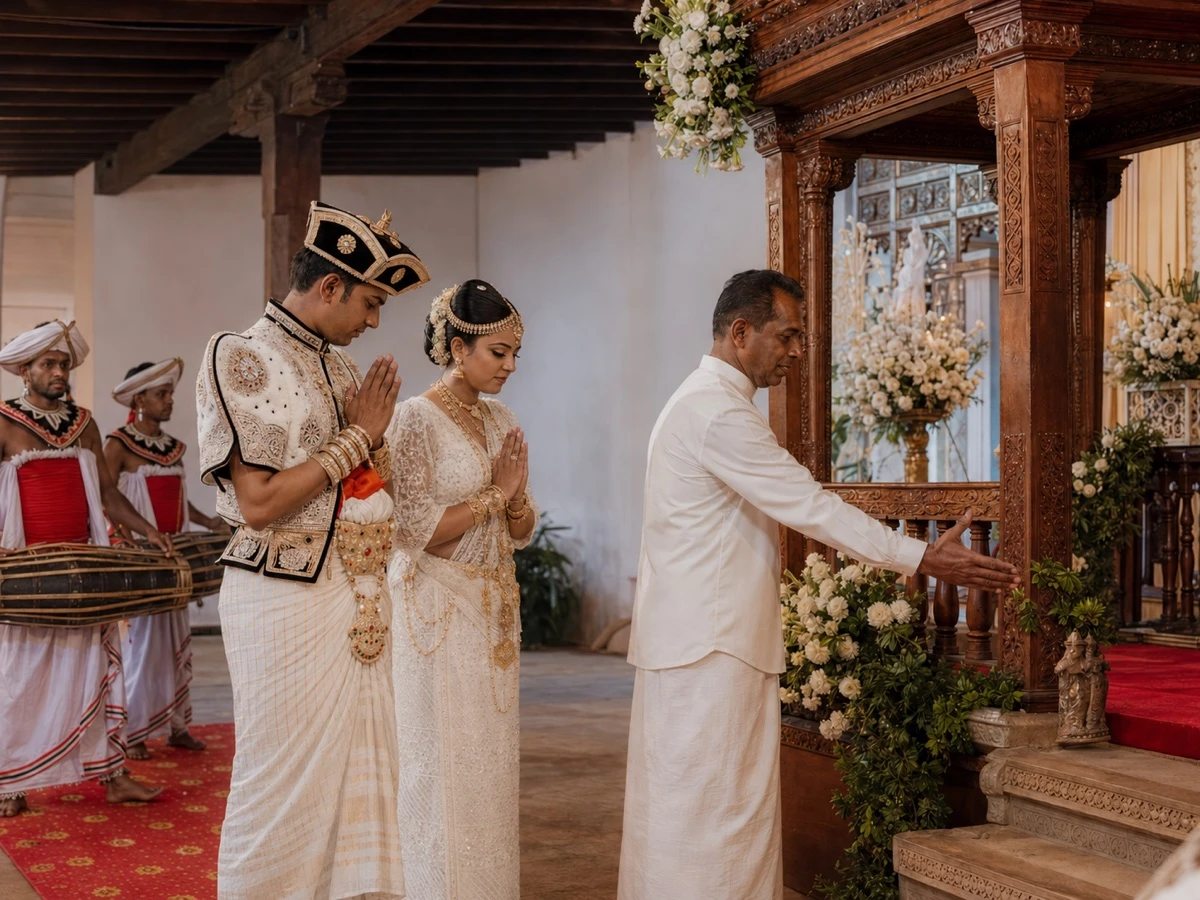
A maternal uncle, the mother's brother, leads the couple onto the poruwa. One elder who had conducted Poruwa ceremonies for many years explained the custom this way: after the father, it is the brother who steps in when his sister's family faces hardship, and leading the couple up shows that responsibility in front of everyone.
3. The groom dresses the bride
One of the first rites on the poruwa is the groom presenting the bride with clothing and jewellery, often a necklace placed around her neck. It is a public promise to provide for her and care for her, made where both families can see it.
4. The ashtaka chanting
As the couple stands on the poruwa, elders recite the ashtaka, verses of blessing. Often there are two reciters, one for each family. The verses ask for the blessings of the Buddha and the gods, and for protection from the evil eye, harmful words and the influence of unlucky planets, so that the couple's life together starts without trouble.
5. Tying the little fingers and pouring water
While the verses continue, an elder ties the little fingers of the bride and groom together with a fine thread. In many families this is a gold thread; in others a white thread. The knot stands for a bond that should not be broken, made in front of the people who will hold the couple to it.
Water is then poured over the joined hands, usually from a brass kendiya. Water is life, and the hope is that the couple will never be short of anything, and that what they wish for will flow into their lives the way the water flows over their hands.

6. The gift to the bride's mother
The groom presents the bride's mother with a white cloth, known as the kiri kada sela. It thanks her for raising her daughter. A story told with this rite says that, long ago, a bride's mother wept at losing her daughter, and the groom gave her cloth to dry her tears. The gift has been part of the ceremony ever since.
7. The betel leaves offering
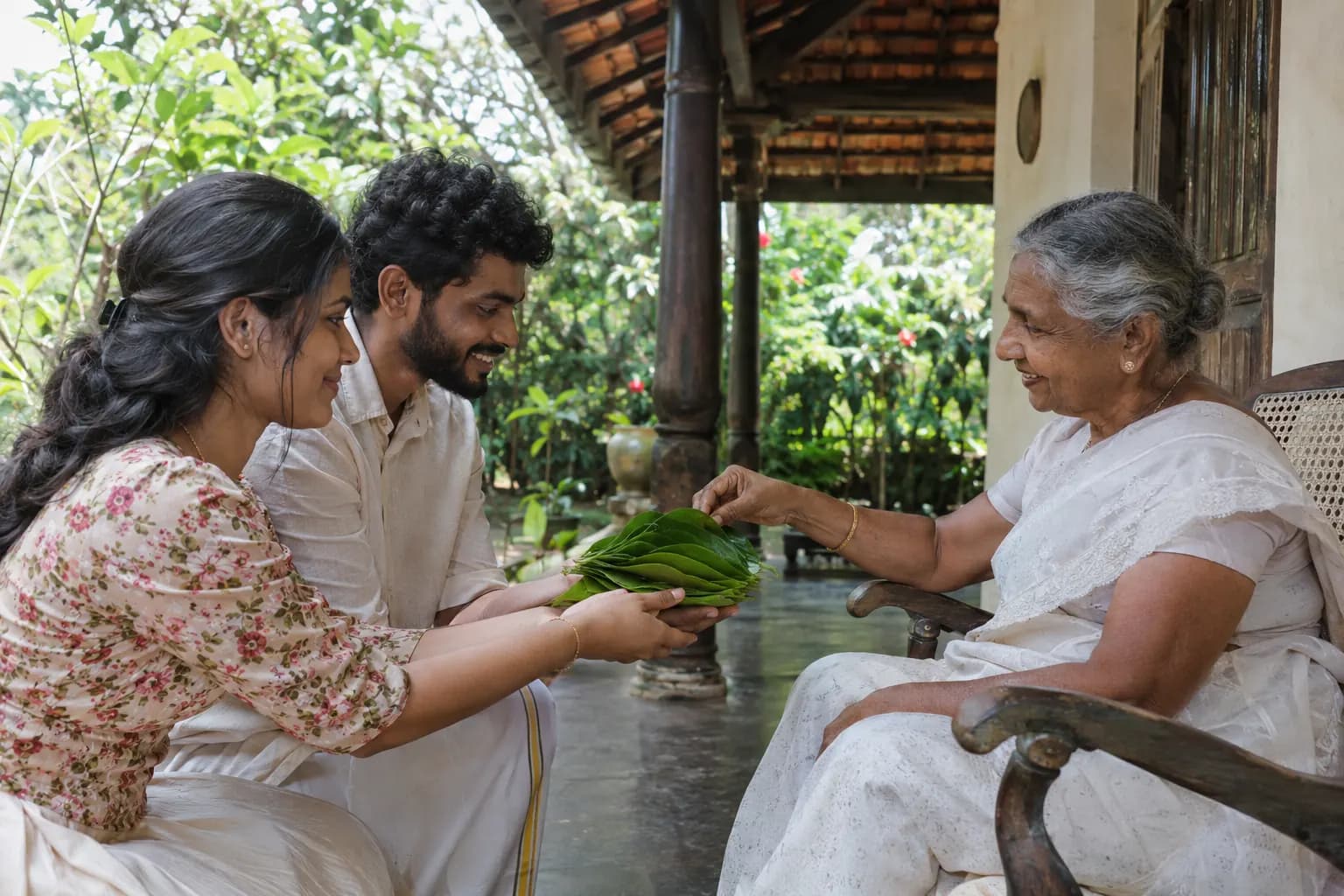
Betel is offered to elders and relatives from both families. Each bundle traditionally has forty leaves, for the fingers and toes of the person giving and the person receiving. The first seven bundles are offered in memory of seven generations of ancestors and are allowed to fall beside the poruwa, because no living person receives them. It is a way of thanking everyone who came before.
8. The Jayamangala Gatha
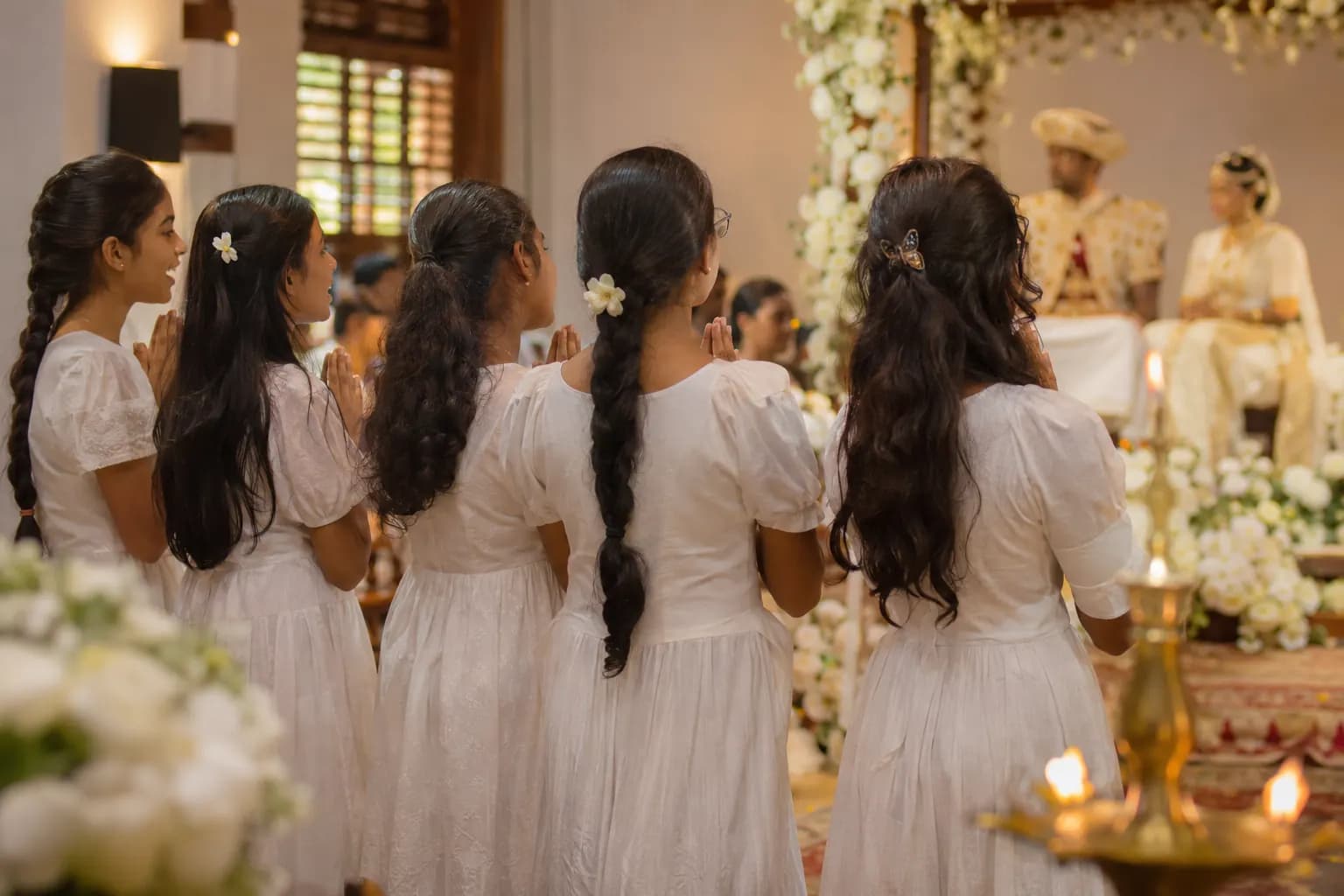
In many ceremonies a small group of girls, usually dressed in white, sings the Jayamangala Gatha, the Pali verses that recall the Buddha's eight victories and wish the same victory and blessing on the couple. For the verses and their meaning, see our page on the Jayamangala Gatha, sung at the Poruwa.
9. Stepping down and breaking the coconut
At the second nakath time the couple steps down from the poruwa. A coconut is split, to drive away any bad influence that might follow them. Everyone watches the coconut: a clean split into two halves is taken as a good sign for the marriage.

10. Gifts and thanks
Finally, gifts of rice or paddy, money, cloth and betel are given to the person who provided and laid the white cloths, traditionally a family of washer folk, in thanks for a role the ceremony cannot do without. Couples often then sign the marriage register with a registrar at a table nearby, which is the legal part of the day.
| Step | Who does it | What it stands for |
|---|---|---|
| Entering at the nakath | The couple, with drummers and conch | Beginning at a good time, announced to all |
| Led onto the poruwa | A maternal uncle | The family's promise to stand behind the couple |
| Dressing the bride | The groom | A public promise to provide and care |
| Ashtaka chanting | Elders, often one from each family | Blessings and protection from harm |
| Little fingers tied, water poured | An elder | A bond not to be broken; a life never short of anything |
| Gift to the bride's mother | The groom | Thanks for raising the bride |
| Betel leaves offering | The couple | Thanks to elders and seven generations of ancestors |
| Jayamangala Gatha | A group of girls in white | Blessing and victory for the couple |
| Stepping down, coconut split | The couple; an elder or helper | Leaving bad influences behind |
| Gifts and thanks | The bride's family | Gratitude to those who served the ceremony |
What each item on the poruwa means
If you are seeing a poruwa for the first time, it can look like a lot of decoration. Almost every piece has a reason. The table below sets them out in one place.
| Item | Where it is | What it stands for |
|---|---|---|
| The platform | Raised, facing the direction the astrologer set | A clean, blessed space where the new life begins |
| Young coconut leaves (gokkola) | Plaited around the frame and pillars | Freshness and celebration; the oldest poruwa dressing |
| Kohomba (neem) leaves | Among the decoration | Strength, healing and protection |
| White cloth on top | Spread over the poruwa | Purity |
| White canopy (viyana) | Stretched above the couple | Purity, and shelter over the couple |
| Four pun kalas | One at each corner | Clay pots of plenty, dressed with areca or coconut flowers: prosperity |
| Four oil lamps | One at each corner | Light offered to the four guardian gods (Satara Waram Deviyo) |
| Paddy, rice and grains | Scattered on the poruwa | A home that never goes hungry |
| Flowers | Scattered and arranged | Beauty and purity; white flowers such as jasmine above all |
| Betel leaves | Scattered, and offered in bundles | Plenty, friendship and respect |
| Coins | Scattered on the poruwa | Financial security |
| Thread and kendiya of water | Used in the ceremony | An unbroken bond; a life that lacks nothing |
Betel deserves a word of its own. Sinhala families use it to invite, to greet, to thank and to show respect, and a common blessing wishes a couple a life rich in rice and betel. That is why it appears on the poruwa twice: scattered as a sign of plenty, and offered in bundles as thanks.

Who stands where
Layouts differ between a village home, a temple hall and a hotel ballroom, but the roles are steady. Use this as a starting point and check it with the person conducting your ceremony.
- The couple stand on the poruwa, facing the direction the astrologer set. Nobody else stands on it for the main rites.
- The maternal uncles lead the couple up and then stand close beside the poruwa.
- The ashtaka reciters, usually one elder from each family, stand at the side of the poruwa where the couple can hear them clearly.
- Parents and close family gather nearest the poruwa, usually each family on its own side, ready for the betel offering and the gift to the bride's mother.
- The girls singing the Jayamangala Gatha stand together near the poruwa, often in a row facing the couple.
- Drummers and the conch blower stand back from the poruwa, often at the entrance the couple walks through.
- Guests sit or stand around the poruwa, leaving the front clear for the family and the photographer.
If you are new to the Poruwa ceremony
If you are the partner marrying into a Sinhala family, or a guest from abroad, a few things make the day easier.
- The time is fixed. The nakath does not move for traffic or late hair appointments. Be ready early, and expect a short wait before the exact minute.
- Someone will guide you. The elders and the person conducting the ceremony tell the couple when to step, turn and offer. You do not need to memorise anything.
- You do not need to understand the words. The chanting is in Sinhala and Pali. Knowing what each step means, from the tables above, is enough to follow it.
- It can sit alongside another ceremony. Plenty of couples hold a Poruwa and a church service, or a Poruwa and a Hindu ceremony, and keep both families' traditions. Read the Sinhala original of this guide, පෝරු මංගල්යය, if your family prefers Sinhala.
What to put on your invitation
Because the Poruwa runs to the minute, a Poruwa invitation carries a few things an ordinary wedding card does not. Make sure yours has these:
- The Poruwa time, exactly as the astrologer gave it. Write it as the auspicious time, for example “The Poruwa ceremony will take place at the auspicious time of 9.42 am”, so guests know to be seated before it.
- Both families. Sinhala invitations traditionally come from the parents, so name the bride's and the groom's parents, for example Mr and Mrs Perera and Mr and Mrs Silva.
- The date and the venue, with a map link, since many guests will be driving to a hotel or hall they have not visited.
- The reception, if it follows at a different time or place, and the homecoming if you are inviting the same guests to it. Our guide to the homecoming ceremony after a Sri Lankan wedding explains how that day is planned.
- A reply-by date, so you have numbers for the caterer.
For ready-to-copy lines in English and Sinhala, including how the nakath time is usually phrased, see our Poruwa and Buddhist invitation wording. To see these details laid out on a real design, open the traditional Kandyan invitation designs and try one with your own names and nakath time.
Send your Poruwa invitation with INVITATION.LK
An invitation for a Poruwa wedding has to get one time exactly right and reach every household, including relatives overseas. This is what INVITATION.LK does for that:
- Every event on one page. The Poruwa, a church service, the reception and the homecoming, each with its own time, venue and map.
- A personal link for every guest, sent from your own WhatsApp with one tap per guest.
- Replies in one place. Guests answer Attending or Not attending and confirm how many are coming, and you can see who has opened their invitation.
- Changes after sending. If the venue or a time has to change, edit the invitation and every guest's link shows the update.
- Your own words. Write the invitation in English, Sinhala or Tamil.
Essential is Rs. 5,000 for one ready-made invitation, Complete is Rs. 10,000 for two (the wedding and the homecoming, for example), and Signature Custom is Rs. 20,000 for a design made just for you. You pay once, only when you publish, and every paid plan includes unlimited guest links.
Start with the full collection of invitation designs, or compare plans and what each one includes.