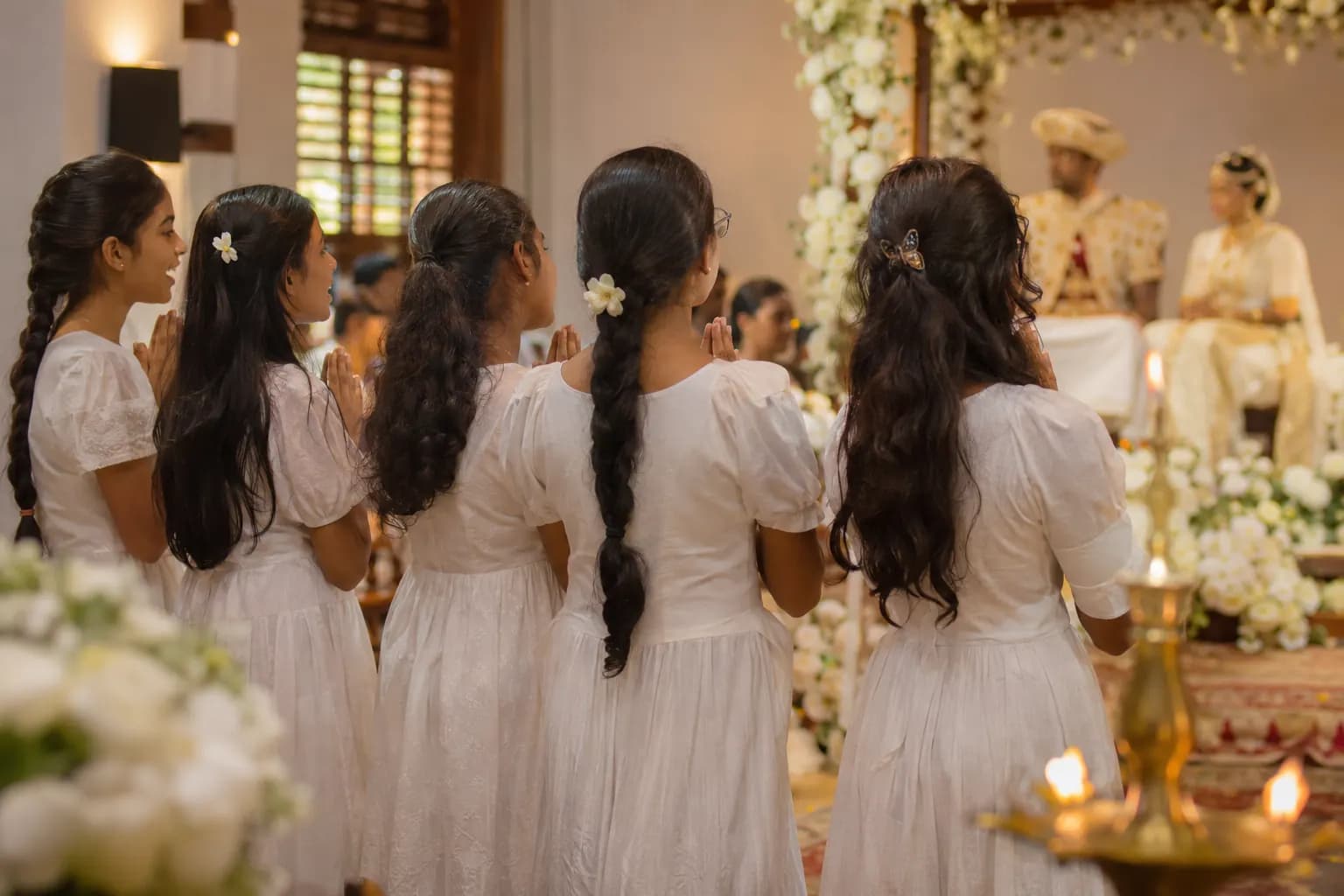
The Jayamangala Gatha (ජයමංගල ගාථා) are eight Pali verses that recall eight victories of the Buddha, each won through a quality such as patience, loving-kindness or wisdom. Every verse ends by wishing the listener the same blessing of victory. At many Sinhala Buddhist weddings, a group of girls sings them at the Poruwa while the couple performs the rites.
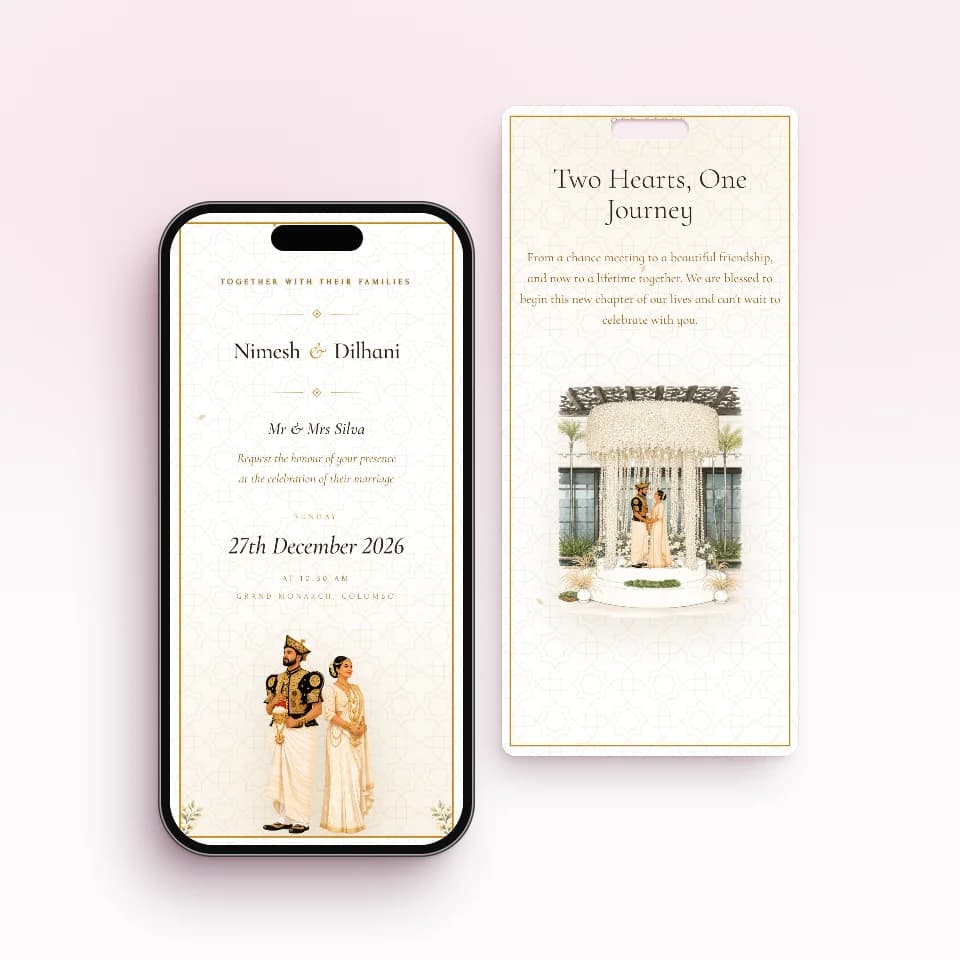
Below you will find all eight verses in Sinhala script with the romanised Pali, a short meaning for each in plain English, the closing verse, and where the chant fits into the ceremony. If you are planning a Poruwa wedding, our traditional Kandyan wedding invitations carry the Poruwa time and every event of the day on one page.
What the Jayamangala Gatha is
The name means "verses of victory and blessing": jaya is victory, mangala is blessing or auspiciousness, and gatha means verses. It is also called the Buddha Jayamangala Atthagatha, the eight verses of the Buddha's victory blessings, and is often known by its opening words, Bāhuṃ sahassam.
It is not the same chant as the Maha Jayamangala Gatha, which begins Mahākāruṇiko nātho. Both are blessing chants, but the one sung at the Poruwa is the eight-verse Bāhuṃ.
Each verse has the same shape. The first two lines describe an opponent; the third names the quality by which the Buddha, the "Lord of Sages", overcame them; and the fourth line is the refrain: by the power of this, may you have blessings of victory. The idea at a wedding is simple and kind: as the Buddha met every challenge with a good quality rather than force, may the couple meet the difficulties of married life the same way.
The eight victories at a glance
| Verse | Who was overcome | The quality that won | A thought for a married couple |
|---|---|---|---|
| 1 | Māra and his army | Generosity and the perfections | Give freely to each other |
| 2 | Āḷavaka, the yaksha | Patience | Stay patient through a long night |
| 3 | Nāḷāgiri, the elephant | Loving-kindness | Meet anger with warmth |
| 4 | Aṅgulimāla | Psychic power | People can change for the better |
| 5 | Ciñcā | Calm and gentleness | Let the truth answer gossip |
| 6 | Saccaka | Wisdom | Listen rather than win the argument |
| 7 | Nandopananda | Psychic power and instruction, through a disciple | Accept help from those you trust |
| 8 | Baka Brahma | Knowledge | Let go of pride |
The last column is our own reflection for couples, not part of the verses. The verses themselves are about the Buddha's victories.
The verses, in Sinhala and Pali, with their meaning
The Pali text below follows the form usually recited in Sri Lanka. Chanting books differ slightly in spelling, and some traditions end each verse with jaya-maṅgal'aggaṃ instead of jayamaṅgalāni. The meanings are short summaries in our own words, to help you follow along, not a word-for-word translation.
Verse 1: Māra and his army
බාහුං සහස්සමභිනිම්මිත සායුධන්තං
ගිරිමේඛලං උදිතඝෝර සසේනමාරං
දානාදිධම්මවිධිනා ජිතවා මුනින්දෝ
තං තේජසා භවතු තේ ජයමංගලානි
Bāhuṃ sahassam abhinimmita sāyudhantaṃ
Girimekhalaṃ uditaghora sasenamāraṃ
Dānādidhammavidhinā jitavā munindo
Taṃ tejasā bhavatu te jayamaṅgalāni
Meaning: Māra came with a thousand arms, each holding a weapon, riding the elephant Girimekhala and roaring with his army. The Buddha overcame him through generosity and the other perfections he had built up. By the power of that victory, may blessings of victory be yours.
Verse 2: Āḷavaka, the yaksha
මාරාතිරේකමභියුජ්ඣිත සබ්බරත්තිං
ඝෝරම්පනාළවකමක්ඛමථද්ධයක්ඛං
ඛන්තීසුදන්තවිධිනා ජිතවා මුනින්දෝ
තං තේජසා භවතු තේ ජයමංගලානි
Mārātirekam abhiyujjhita sabbarattiṃ
Ghorampanāḷavakam akkhamathaddhayakkhaṃ
Khantīsudantavidhinā jitavā munindo
Taṃ tejasā bhavatu te jayamaṅgalāni
Meaning: Āḷavaka, a fierce and stubborn yaksha, fought the Buddha through a whole night, more terrible even than Māra. The Buddha won through patience and self-control. By the power of that victory, may blessings of victory be yours.
Verse 3: Nāḷāgiri, the maddened elephant
නාළාගිරිං ගජවරං අතිමත්තභූතං
දාවග්ගිචක්කමසනීව සුදාරුණන්තං
මෙත්තම්බුසේකවිධිනා ජිතවා මුනින්දෝ
තං තේජසා භවතු තේ ජයමංගලානි
Nāḷāgiriṃ gajavaraṃ atimattabhūtaṃ
Dāvaggicakkam asanīva sudāruṇantaṃ
Mettambusekavidhinā jitavā munindo
Taṃ tejasā bhavatu te jayamaṅgalāni
Meaning: The great elephant Nāḷāgiri, driven mad, charged like a forest fire or a bolt of lightning. The Buddha calmed him as if with cool water, through loving-kindness. By the power of that victory, may blessings of victory be yours.
Verse 4: Aṅgulimāla
උක්ඛිත්තඛග්ගමතිහත්ථ සුදාරුණන්තං
ධාවන්තියෝජනපථංගුලිමාලවන්තං
ඉද්ධීභිසංඛතමනෝ ජිතවා මුනින්දෝ
තං තේජසා භවතු තේ ජයමංගලානි
Ukkhittakhaggam atihattha sudāruṇantaṃ
Dhāvantiyojanapath'aṅgulimālavantaṃ
Iddhībhisaṅkhatamano jitavā munindo
Taṃ tejasā bhavatu te jayamaṅgalāni
Meaning: Aṅgulimāla, a feared killer who wore a garland of fingers, chased the Buddha for three leagues with his sword raised. The Buddha overcame him through psychic power, so the running man could not catch him, and Aṅgulimāla went on to become a monk. By the power of that victory, may blessings of victory be yours.
Verse 5: Ciñcā and her false accusation
කත්වාන කට්ඨමුදරං ඉව ගබ්භිනීයා
චිඤ්චාය දුට්ඨවචනං ජනකායමජ්ඣේ
සන්තේන සෝමවිධිනා ජිතවා මුනින්දෝ
තං තේජසා භවතු තේ ජයමංගලානි
Katvāna kaṭṭham udaraṃ iva gabbhinīyā
Ciñcāya duṭṭhavacanaṃ janakāyamajjhe
Santena somavidhinā jitavā munindo
Taṃ tejasā bhavatu te jayamaṅgalāni
Meaning: Ciñcā tied a piece of wood to her belly to look pregnant and accused the Buddha in front of a crowd. He answered with stillness and gentleness, and the lie came undone. By the power of that victory, may blessings of victory be yours.
Verse 6: Saccaka, the debater
සච්චං විහාය මතිසච්චකවාදකේතුං
වාදාභිරෝපිතමනං අතිඅන්ධභූතං
පඤ්ඤාපදීපජලිතෝ ජිතවා මුනින්දෝ
තං තේජසා භවතු තේ ජයමංගලානි
Saccaṃ vihāya matisaccakavādaketuṃ
Vādābhiropitamanaṃ ati andhabhūtaṃ
Paññāpadīpajalito jitavā munindo
Taṃ tejasā bhavatu te jayamaṅgalāni
Meaning: Saccaka, proud of his skill in argument, had turned away from the truth and was blinded by his love of debate. The Buddha won with the bright lamp of wisdom. By the power of that victory, may blessings of victory be yours.
Verse 7: Nandopananda, the naga king
නන්දෝපනන්දභුජගං විබුධං මහිද්ධිං
පුත්තේන ථේරභුජගේන දමාපයන්තෝ
ඉද්ධූපදේසවිධිනා ජිතවා මුනින්දෝ
තං තේජසා භවතු තේ ජයමංගලානි
Nandopanandabhujagaṃ vibudhaṃ mahiddhiṃ
Puttena therabhujagena damāpayanto
Iddhūpadesavidhinā jitavā munindo
Taṃ tejasā bhavatu te jayamaṅgalāni
Meaning: Nandopananda, a powerful naga with wrong views, was tamed by the Elder Moggallāna, the Buddha's disciple, who took the form of a naga himself. The Buddha overcame him through psychic power and instruction, working through that disciple. By the power of that victory, may blessings of victory be yours.
Verse 8: Baka, the Brahma
දුග්ගාහදිට්ඨිභුජගේන සුදට්ඨහත්ථං
බ්රහ්මං විසුද්ධිජුතිමිද්ධිබකාභිධානං
ඤාණාගදේන විධිනා ජිතවා මුනින්දෝ
තං තේජසා භවතු තේ ජයමංගලානි
Duggāhadiṭṭhibhujagena sudaṭṭhahatthaṃ
Brahmaṃ visuddhijutim iddhibakābhidhānaṃ
Ñāṇāgadena vidhinā jitavā munindo
Taṃ tejasā bhavatu te jayamaṅgalāni
Meaning: Baka, a Brahma proud of his purity, radiance and power, was gripped by a wrong view as if bitten by a snake. The Buddha cured him with the medicine of knowledge. By the power of that victory, may blessings of victory be yours.
The closing verse
ඒතාපි බුද්ධජයමංගල අට්ඨගාථා
යෝ වාචනෝ දිනදිනේ සරතේමතන්දී
හිත්වානනේකවිවිධානි චුපද්දවානි
මෝක්ඛං සුඛං අධිගමෙය්ය නරෝ සපඤ්ඤෝ
Etāpi buddhajayamaṅgala aṭṭhagāthā
Yo vācano dinadine sarate matandī
Hitvān'anekavividhāni c'upaddavāni
Mokkhaṃ sukhaṃ adhigameyya naro sapañño
Meaning: A wise person who recites or remembers these eight verses of the Buddha's victory blessings day after day, without growing slack, leaves many kinds of trouble behind and reaches freedom and true happiness.
When it is sung at the Poruwa
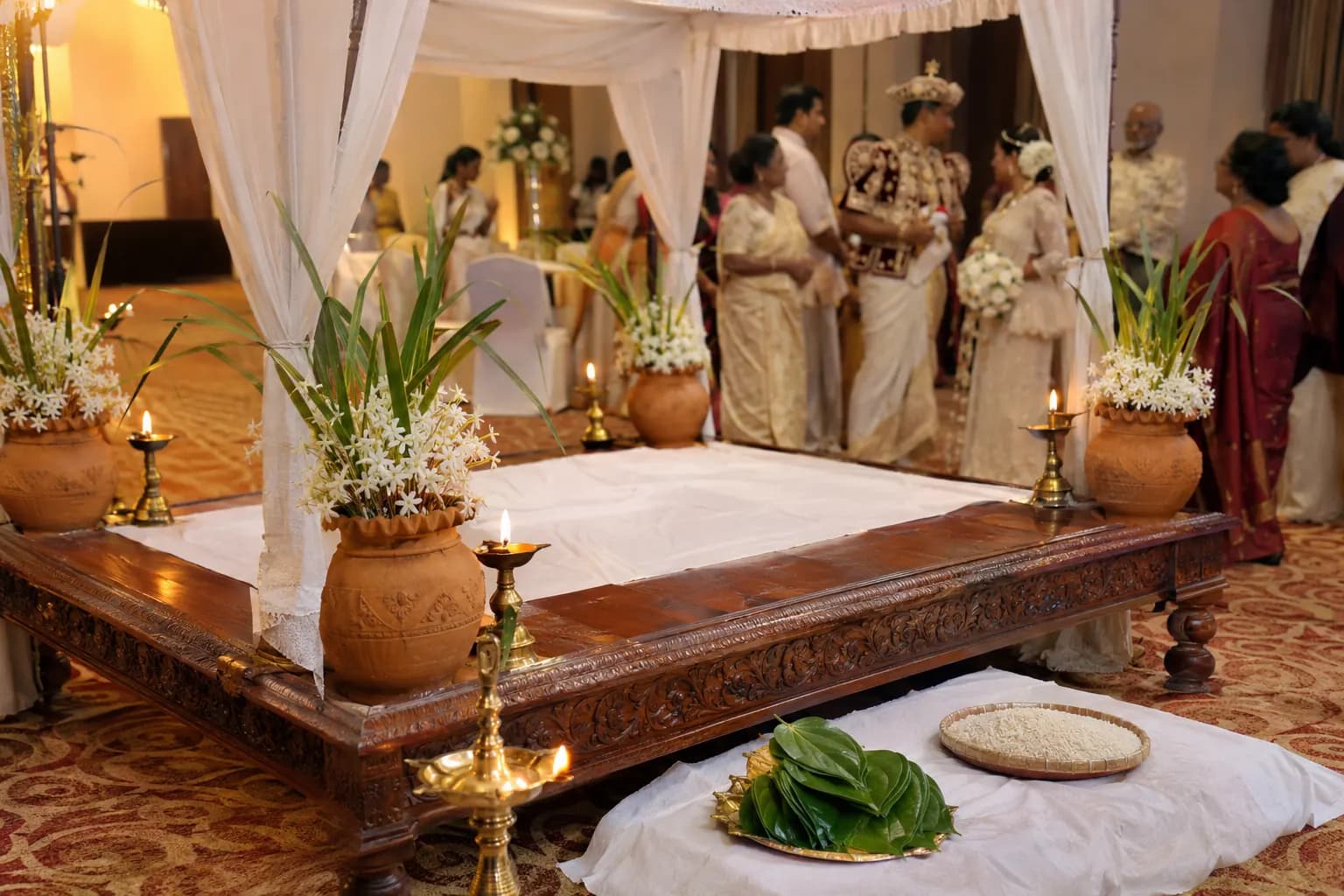
At many Sinhala Buddhist weddings, the Jayamangala Gatha is sung while the couple stands on the poruwa and the rites are performed: the blessings by the elders, the tying of the little fingers, the pouring of water and the betel offering. A small group of girls, often in white, sings it to a gentle melody, usually standing near the poruwa. The exact moment differs between families and between the people who conduct the ceremony, so ask yours where they would like it.
Some families also have the verses chanted at other times, such as at home before leaving for the wedding. For the full order of the ceremony, see our step-by-step Poruwa ceremony guide, and for the times that govern it, our guide to the nakath pathraya.
Arranging the singers
- Ask early. If girls from the family will sing, give them the text and a recording a few weeks before so they can practise together.
- Tell the person leading the ceremony. They will want to know when the singing starts and how long it lasts, so the rites and the nakath fit together.
- Check the sound. In a large hall, a microphone near the poruwa helps guests at the back hear the verses.
- Thank them. Many families give the singers a small gift after the ceremony.
A Poruwa invitation from INVITATION.LK
The verses bless the couple on the day. Getting everyone there on time is the invitation's job:
- The Poruwa time exactly as set, with the reception and other events on the same page.
- A personal link for every guest, sent one tap per guest from your own WhatsApp.
- Replies as they come in: Attending or Not attending, with how many are coming.
- Write it in English, Sinhala or Tamil, and update any detail later on the same link.
You can build and preview for free. Essential is Rs. 5,000 for one ready-made invitation, Complete is Rs. 10,000 for two (the wedding and the homecoming, for example), and Signature Custom is Rs. 20,000 for a design made just for you. You pay once, only when you publish, and every paid plan includes unlimited guest links.
Check what each plan includes or find Poruwa invitation wording in Sinhala and English.