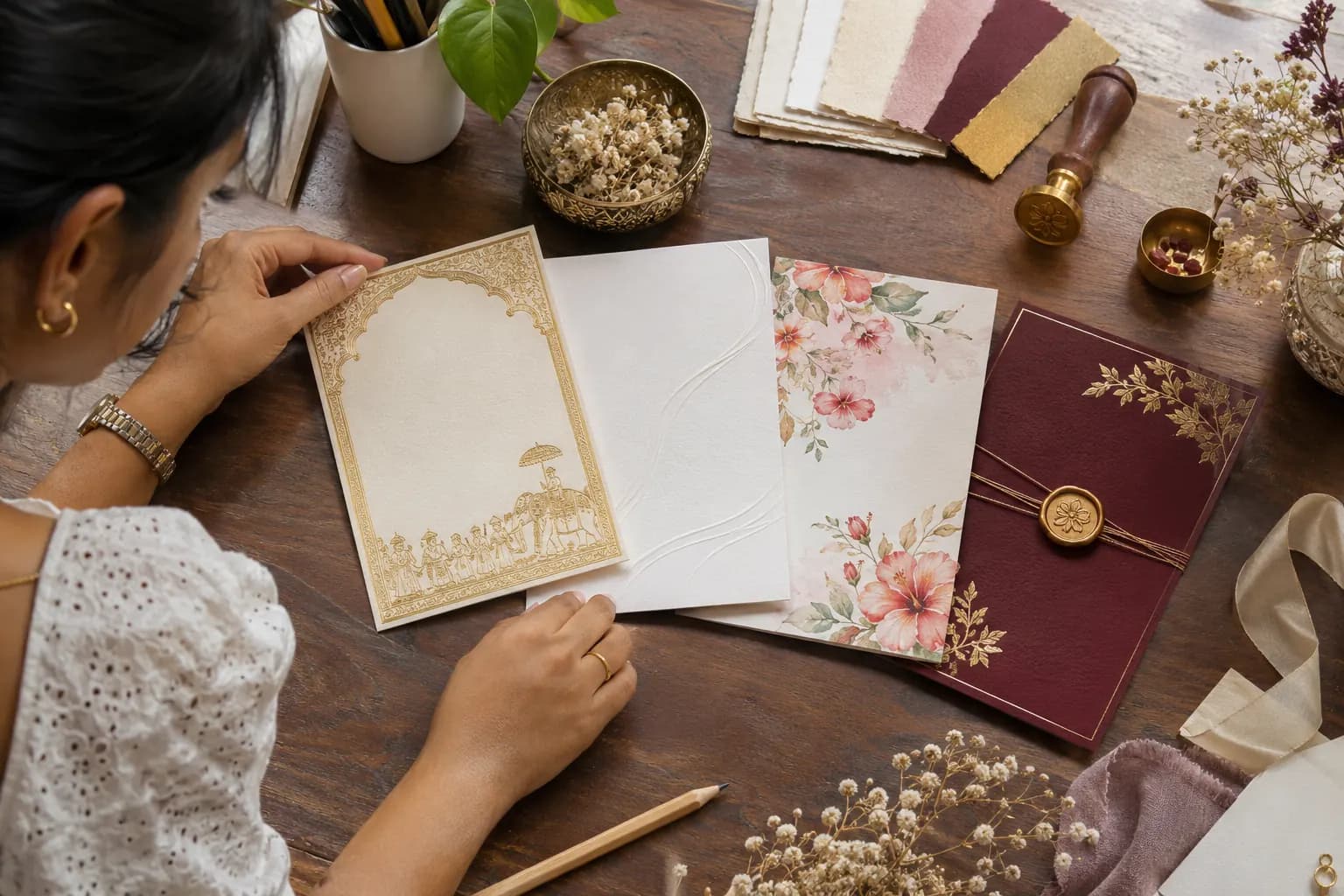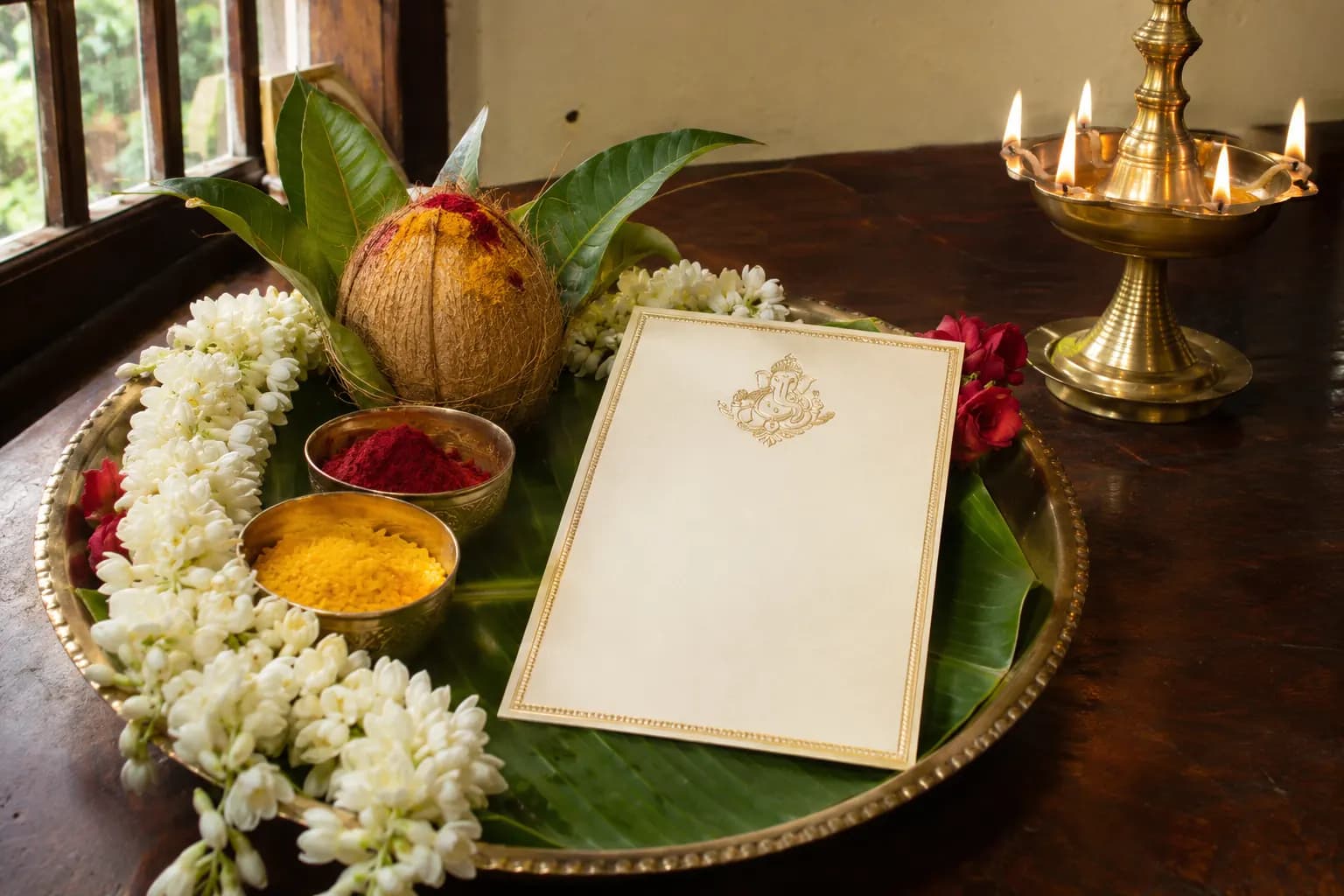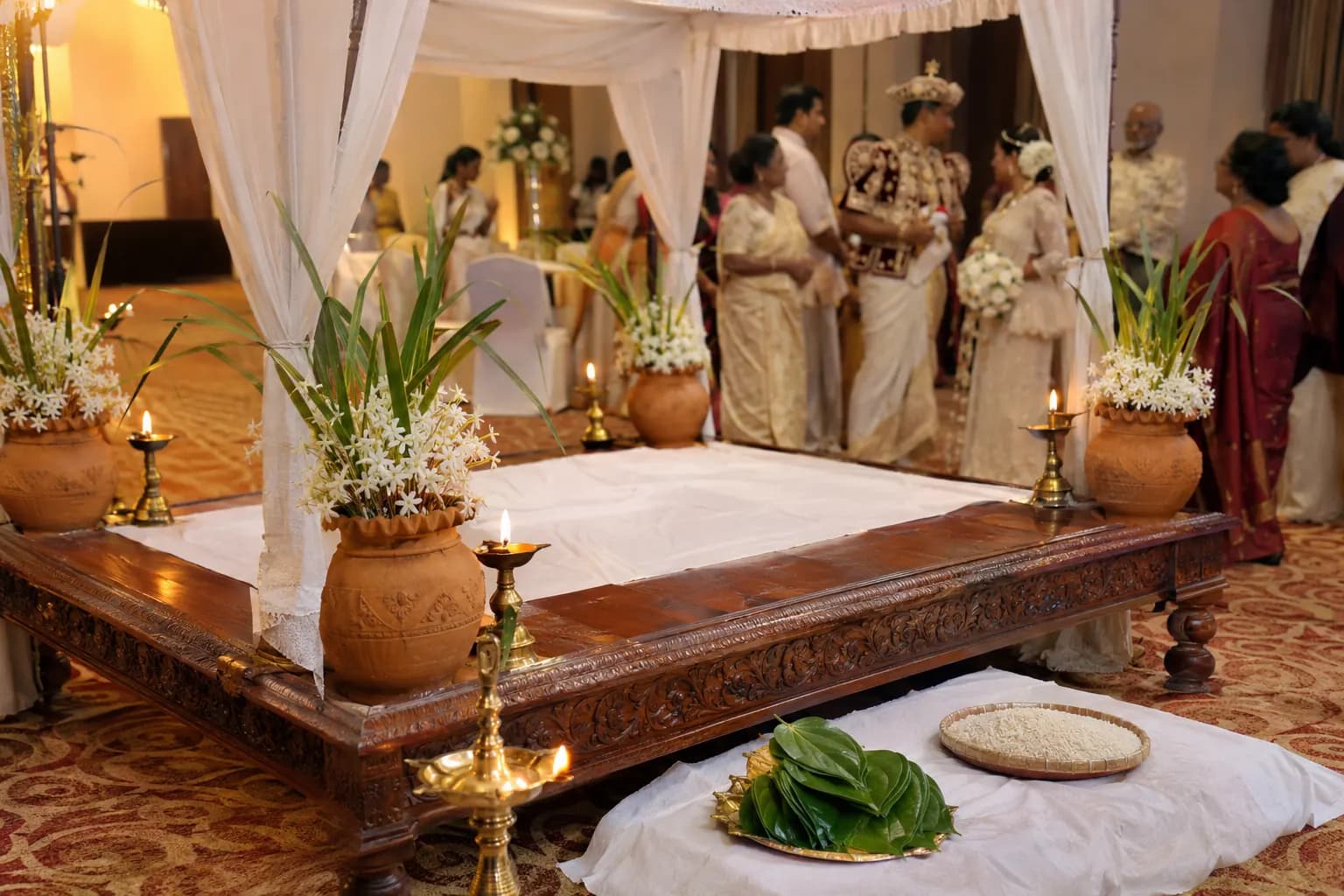
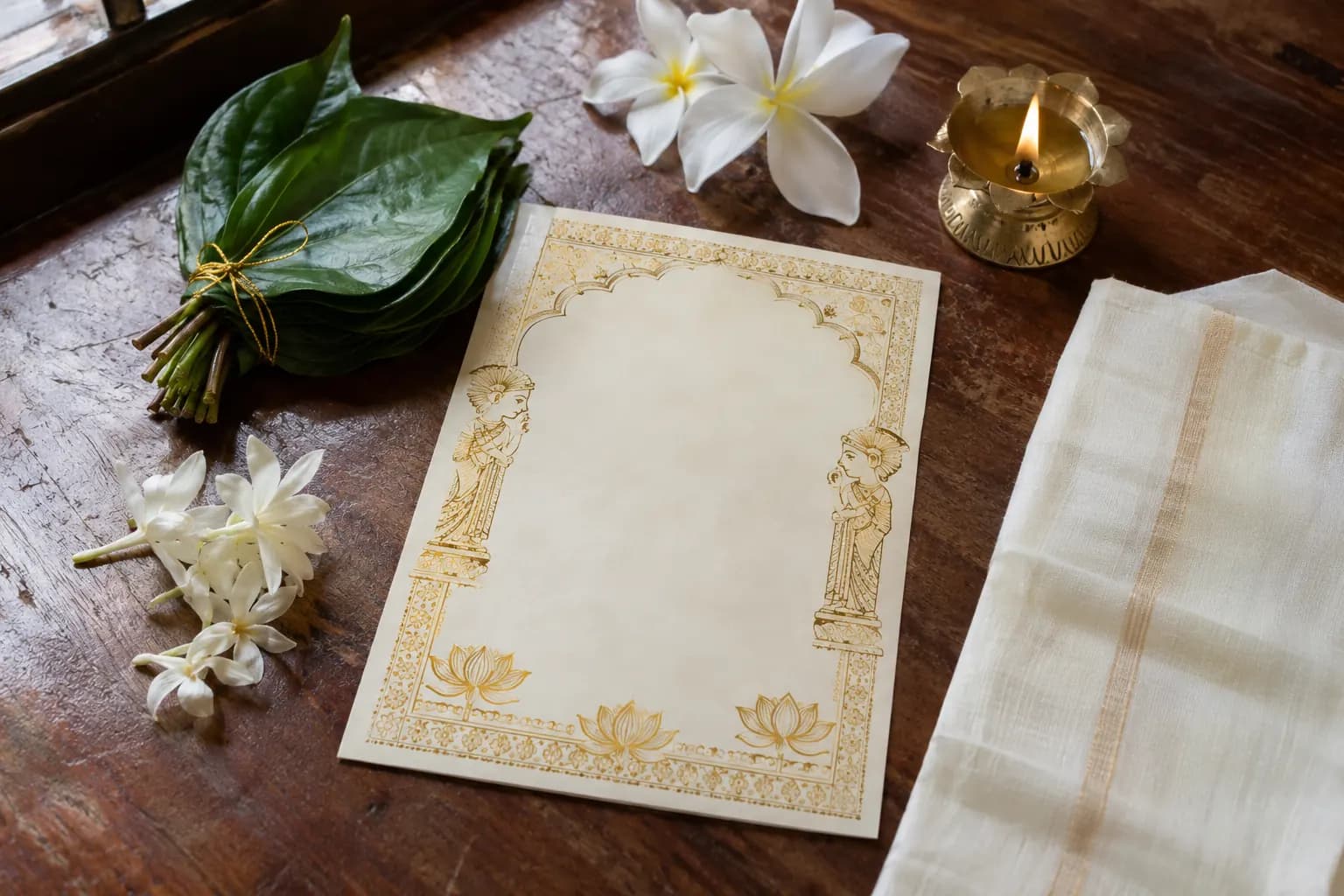
A Sinhala wedding card follows a set order: a short blessing at the top, both families named with their addresses, the couple as their beloved son and daughter, the date, the Poruwa nakath time to the minute, the venue, and a respectful invitation to attend. Keep that order, write it in Unicode Sinhala, and almost any traditional design will carry it well.
This guide covers how a Sinhala wedding invitation is laid out, how both families are named, Sinhala wording you can copy, the designs that suit it and how to type Sinhala on a phone or computer. Every design mentioned is one of our wedding card designs you can edit online, and the wording works on a printed card too.
How a Sinhala wedding card is laid out
Whether people search for a wedding invitation in Sinhala or an invitation card in Sinhala, they are usually looking for the same thing: a formal card in the register their parents and grandparents expect. That register is respectful and a little ceremonial. Sentences are long, families are named in full with initials, and the couple are introduced through their parents rather than on their own.
The table below breaks a typical card into its lines. It uses one made-up couple throughout: Kasun, son of Mr and Mrs S. K. Jayawardena, and Hiruni, daughter of Mr and Mrs W. A. Perera, marrying on Wednesday 8 September 2027 with the Poruwa ceremony at 10.24 am.
| Line | What it does | Sinhala example | In English |
|---|---|---|---|
| Blessing | Opens the card with good wishes | ශ්රී ශුභ මංගලම් | Sri Suba Mangalam: may it be a happy, auspicious occasion |
| Groom's family | Names his parents, their address and the groom | [ලිපිනය] පදිංචි එස්. කේ. ජයවර්ධන මහතා සහ මහත්මියගේ ආදරණීය පුත් කසුන් | Kasun, beloved son of Mr and Mrs S. K. Jayawardena of [address] |
| Bride's family | Names her parents, their address and the bride | [ලිපිනය] පදිංචි ඩබ්ලිව්. ඒ. පෙරේරා මහතා සහ මහත්මියගේ ආදරණීය දියණිය හිරුණි | Hiruni, beloved daughter of Mr and Mrs W. A. Perera of [address] |
| Occasion and date | Says what is happening and when | යන දෙදෙනාගේ විවාහ මංගල්යය 2027 සැප්තැම්බර් 8 වන බදාදා | the wedding of ..., on Wednesday 8 September 2027 |
| Nakath time | Gives the auspicious time for the Poruwa | පෝරුවේ චාරිත්ර පෙ.ව. 10.24 සුබ මොහොතින් | the Poruwa ceremony at the auspicious time of 10.24 am |
| Venue | Hall or hotel and the town | [ශාලාව], [නගරය] හිදී | at [hall], [town] |
| Invitation | Asks the guest and their family to attend | ඔබත් ඔබේ පවුලේ සැමත් සහභාගී වන ලෙස ගෞරවයෙන් ආරාධනා කරමු | we respectfully invite you and your family to attend |
| Reply | Asks for an answer by a date | 2027 අගෝස්තු 20 වන දිනට පෙර ඔබගේ පැමිණීම හෝ නොපැමිණීම කාරුණිකව දන්වන්න | kindly let us know by 20 August 2027 whether you can attend |
| Hosts and contact | Who is inviting, and a number to call | ඩබ්ලිව්. ඒ. පෙරේරා මහතා සහ මහත්මිය, [දුරකථන අංකය] | Mr and Mrs W. A. Perera, [phone number] |
A few words appear on almost every card: මහතා (Mr), මහත්මිය (Mrs), ආදරණීය (beloved), පදිංචි (residing at), සුබ මොහොත (auspicious moment) and ආරාධනා කරමු (we invite). When a parent has passed away, the word දිවංගත (the late) goes before their name if the family chooses to include them.
How both families are named
A Sinhala wedding invitation card is an invitation from families, not only from the couple. There are three common ways to do it, and each is correct:
- Both families together. One card names both sets of parents, often the groom's side first. This suits a wedding the two families plan and pay for together.
- One family hosting. Traditionally the bride's family hosts the wedding and the groom's family hosts the homecoming, so each family often sends cards in its own name: “our beloved daughter Hiruni” with the groom's parents named inside the text.
- The couple inviting. Shorter and warmer, common for a hotel reception or when the couple are hosting. Elders may still prefer to see their names, so it is worth adding the parents underneath.
Use initials and surname the way each family writes them, and check every spelling with the people named. A wrong initial on an uncle's card is remembered far longer than the design.
Writing the nakath time
For a Buddhist wedding the Poruwa time comes from the astrologer and is printed exactly, minutes included. Write පෙ.ව. for morning and ප.ව. for afternoon and evening, and never round 10.24 to 10.30. If you want guests seated before the Poruwa, add a separate arrival time rather than changing the nakath. Our article on the nakath pathraya and how it is set explains where these times come from, and the step-by-step Poruwa ceremony guide covers what happens at each one.
Sinhala wording you can copy
Below are three complete versions built on the same example. Replace the names, date, nakath and venue with your own. Square brackets mark the parts to fill in. Each is followed by what it says in English, so relatives abroad can check it too.
Both families inviting together
ශ්රී ශුභ මංගලම්
[ලිපිනය] පදිංචි එස්. කේ. ජයවර්ධන මහතා සහ මහත්මියගේ ආදරණීය පුත් කසුන්
සහ
[ලිපිනය] පදිංචි ඩබ්ලිව්. ඒ. පෙරේරා මහතා සහ මහත්මියගේ ආදරණීය දියණිය හිරුණි
යන දෙදෙනාගේ විවාහ මංගල්යය 2027 සැප්තැම්බර් 8 වන බදාදා [ශාලාව], [නගරය] හිදී පැවැත්වේ.
පෝරුවේ චාරිත්ර පෙ.ව. 10.24 සුබ මොහොතින් ආරම්භ වේ.
එම මංගල අවස්ථාවට ඔබත් ඔබේ පවුලේ සැමත් සහභාගී වන ලෙස ගෞරවයෙන් ආරාධනා කරමු.In English: Sri Suba Mangalam. The wedding of Kasun, beloved son of Mr and Mrs S. K. Jayawardena, and Hiruni, beloved daughter of Mr and Mrs W. A. Perera, takes place on Wednesday 8 September 2027 at [hall], [town]. The Poruwa ceremony begins at the auspicious time of 10.24 am. We respectfully invite you and your family to join us.
The bride's parents inviting
ශ්රී ශුභ මංගලම්
අපගේ ආදරණීය දියණිය හිරුණි සහ
එස්. කේ. ජයවර්ධන මහතා සහ මහත්මියගේ ආදරණීය පුත් කසුන්
යන දෙදෙනාගේ විවාහ මංගල්යය 2027 සැප්තැම්බර් 8 වන බදාදා [ශාලාව], [නගරය] හිදී පැවැත්වීමට නියමිතය.
ඔබගේ පැමිණීමෙන් එම සුබ දිනය අපට වඩාත් අර්ථවත් වනු ඇත.
ඩබ්ලිව්. ඒ. පෙරේරා මහතා සහ මහත්මිය
[ලිපිනය]
[දුරකථන අංකය]In English: Sri Suba Mangalam. The wedding of our beloved daughter Hiruni and Kasun, beloved son of Mr and Mrs S. K. Jayawardena, is to take place on Wednesday 8 September 2027 at [hall], [town]. Your presence will make that happy day all the more meaningful to us. Mr and Mrs W. A. Perera, [address], [phone number].
The couple inviting, short
අපගේ ජීවිතයේ සුන්දරම දිනය ඔබ සමඟ බෙදා ගැනීමට අපි කැමැත්තෙමු.
2027 සැප්තැම්බර් 8, බදාදා
පෝරුවේ චාරිත්ර පෙ.ව. 10.24 ට
[ශාලාව], [නගරය]
කසුන් සහ හිරුණිIn English: We would love to share the most beautiful day of our lives with you. Wednesday 8 September 2027, Poruwa ceremony at 10.24 am, [hall], [town]. Kasun and Hiruni.
For more versions, including a parent who has passed away and reception lines, see our Poruwa and Buddhist invitation wording in Sinhala and English. Every Sinhala line here will read best if one elder in the family reads it aloud before you send it.
Sinhala wedding card designs that suit
A Sinhala card sits most naturally on a traditional design: ivory or cream, maroon or emerald, gold borders and Kandyan detail. These are the designs we would start with. On each of them you can choose Sinhala in the editor: the design's own labels and dates switch to Sinhala, you pick a Sinhala font, and you write your own wording.
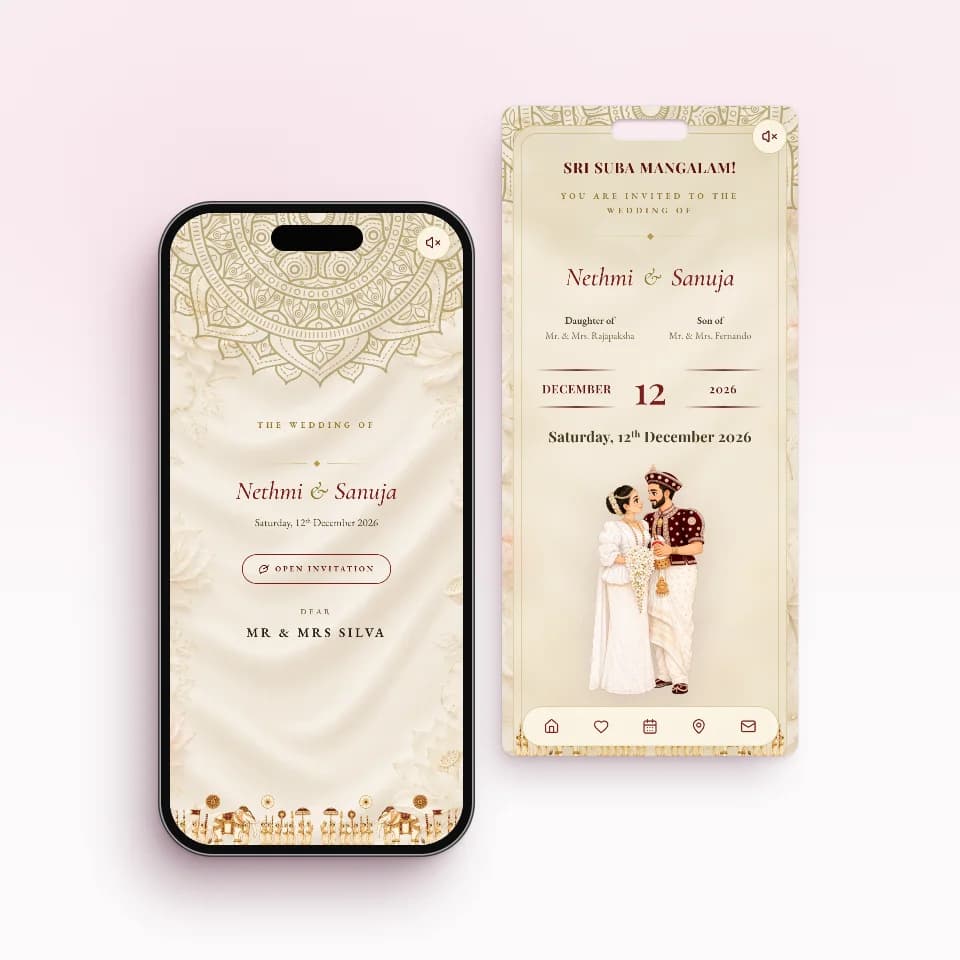
- Nilame Traditional: Kandyan heritage in ivory and maroon, with a Sri Suba Mangalam blessing over the names and a perahera across the foot.
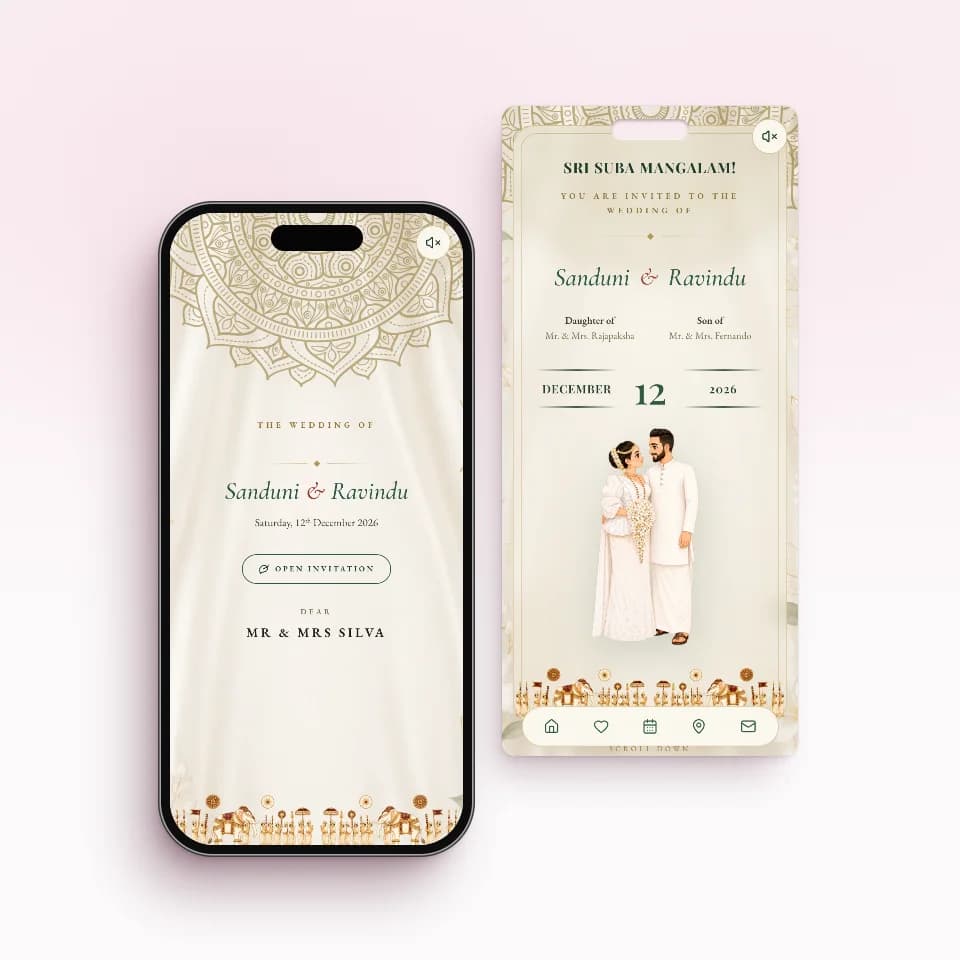
- Ariya Sinhala: a golden-hour film through the hills, then pearl ivory, deep emerald and champagne gold.
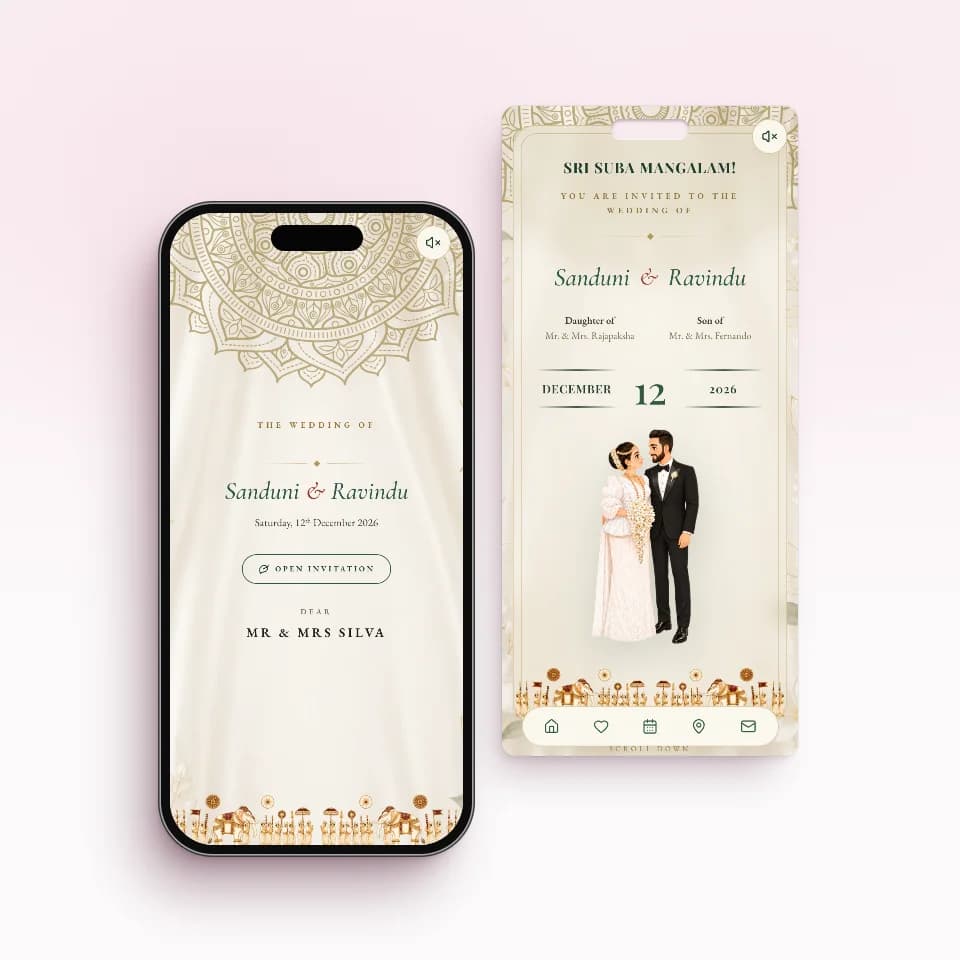
- Kandyan Classic: Kandyan emerald, with the groom in a suit.
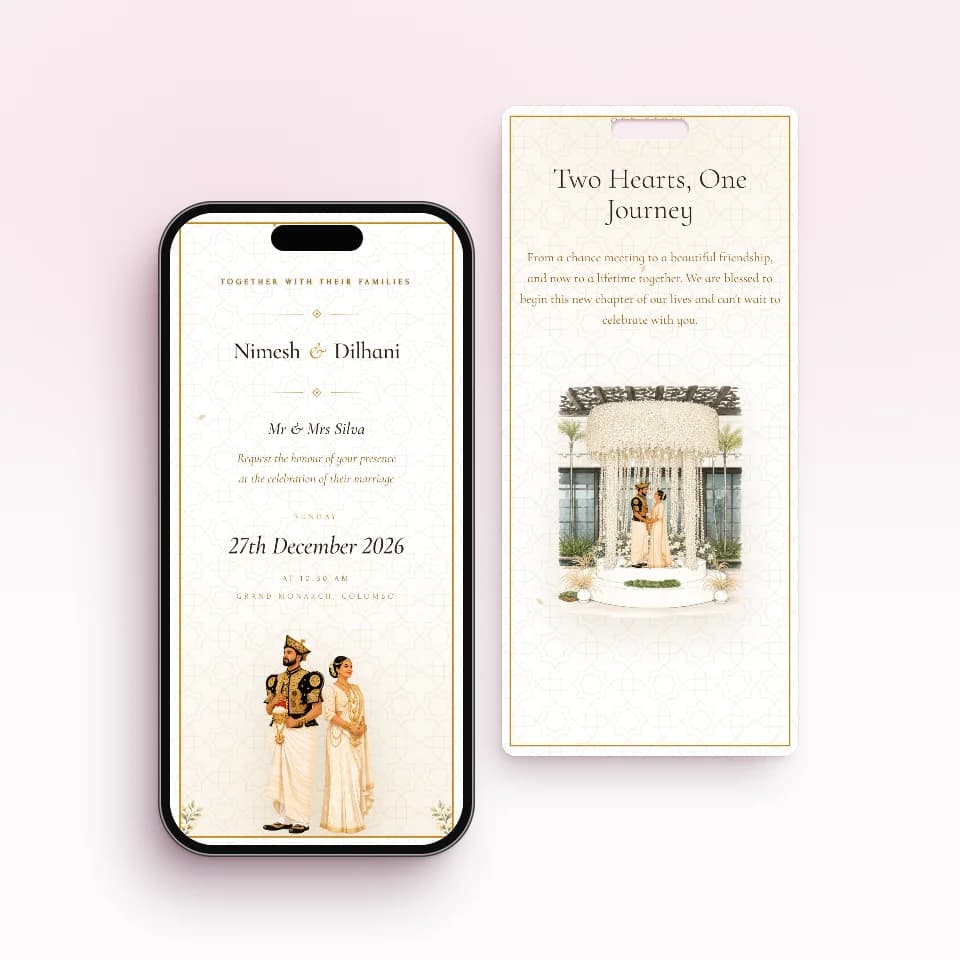
- Ceylon Traditional: cream and gold in a Ceylon border.
You can see all of them side by side, with Poruwa wording and guidance, on our page of Kandyan and Poruwa wedding invitations. If you already have a printed card and want the online invitation to match it, a Signature Custom design can be built to match.
Sinhala, English or both on one card
Most Sinhala wedding cards take one of three shapes. All Sinhala suits a family whose guests read Sinhala comfortably. A Sinhala blessing over English details is a common mix, especially when relatives abroad or colleagues are invited. And a full Sinhala and English card, side by side or front and back, covers everyone at the cost of more text to check.
Online, you can write your invitation in English, Sinhala or Tamil. Sinhala and English on one invitation with a language switch, so each guest taps සිං or EN and reads it in their language, is available as a custom design (Signature Custom). Start a Signature Custom design brief if that is what your family needs. The dashboard where you edit and manage guests is in English.
How to type Sinhala into your invitation
- On a phone. Add a Sinhala keyboard in your phone's keyboard settings. Many keyboards also let you type in English letters and turn them into Sinhala as you go.
- On a computer. Windows and macOS both include Sinhala keyboard layouts. If you do not know the layout, type your wording in a Singlish-to-Unicode converter and paste the result.
- Use Unicode, not FM fonts. Text typed in older desktop-publishing fonts stores Sinhala shapes as English letters. Paste it into a website and it turns into a jumble of Latin letters. If that happens, retype or convert it to Unicode.
- Check on your phone. Preview the invitation on the kind of phone your relatives use, and read every line once, especially the names, the date and the nakath.
Make your Sinhala invitation on INVITATION.LK
Every design in this guide is a live invitation you edit yourself in the browser, and you can browse the full collection of wedding invitation templates for more. Write it in Sinhala, add the Poruwa time, the reception and the venues with their maps, then send each guest their own link from your own WhatsApp, one tap per guest. Guests reply Attending or Not attending with a head count, your guest list shows who has opened their invitation, and you can fix a time or venue later on the same link. Our guide to sending wedding invitations on WhatsApp walks through it.
Essential is Rs. 5,000 for one ready-made invitation, Complete is Rs. 10,000 for two (the wedding and the homecoming, for example), and Signature Custom is Rs. 20,000 for a design made just for you. You pay once, only when you publish, and every paid plan includes unlimited guest links.
Compare what each plan includes, or create a free account and start writing. If you are writing in Tamil instead, read our guide to Tamil wedding invitation cards.